
Roofing Contractor Jobsite Guide: What to Expect at Your Hollywood, FL Home
Most homeowners research price, materials, and licensing — then get blindsided by the experience itself. A reroof is a demolition project happening eight feet above your ceiling. It is loud, it produces debris, and it takes over your driveway.
None of that is a problem when you know it is coming and your roofing contractor manages it properly. This guide covers what actually happens at a Hollywood, Florida home from the day before tear-off to the final magnet sweep.
If you have not selected a contractor yet, our earlier pieces on reading the estimate and permits and inspections cover the paperwork side.
The Week Before: What Your Contractor Should Confirm
A professional project manager contacts you several days out with a specific list, not a vague "we'll see you Monday":
- Dumpster or dump trailer placement. Where it goes, when it arrives, and what surface protection goes under it. On paver driveways common in Emerald Hills and Hollywood Lakes, plywood underlayment beneath the container is not optional.
- Material delivery. Shingle and tile loads are often staged on the roof or in the driveway a day early. Confirm the drop location.
- Power access. Crews need exterior outlets for compressors and saws.
- Vehicle plan. Park on the street for the duration. You do not want to be boxed in behind a loaded trailer.
- HOA notification. Several Hollywood communities require advance notice, approved work hours, and sometimes color approval. Your contractor should ask; you should confirm.
Day 1: Protection, Then Tear-Off
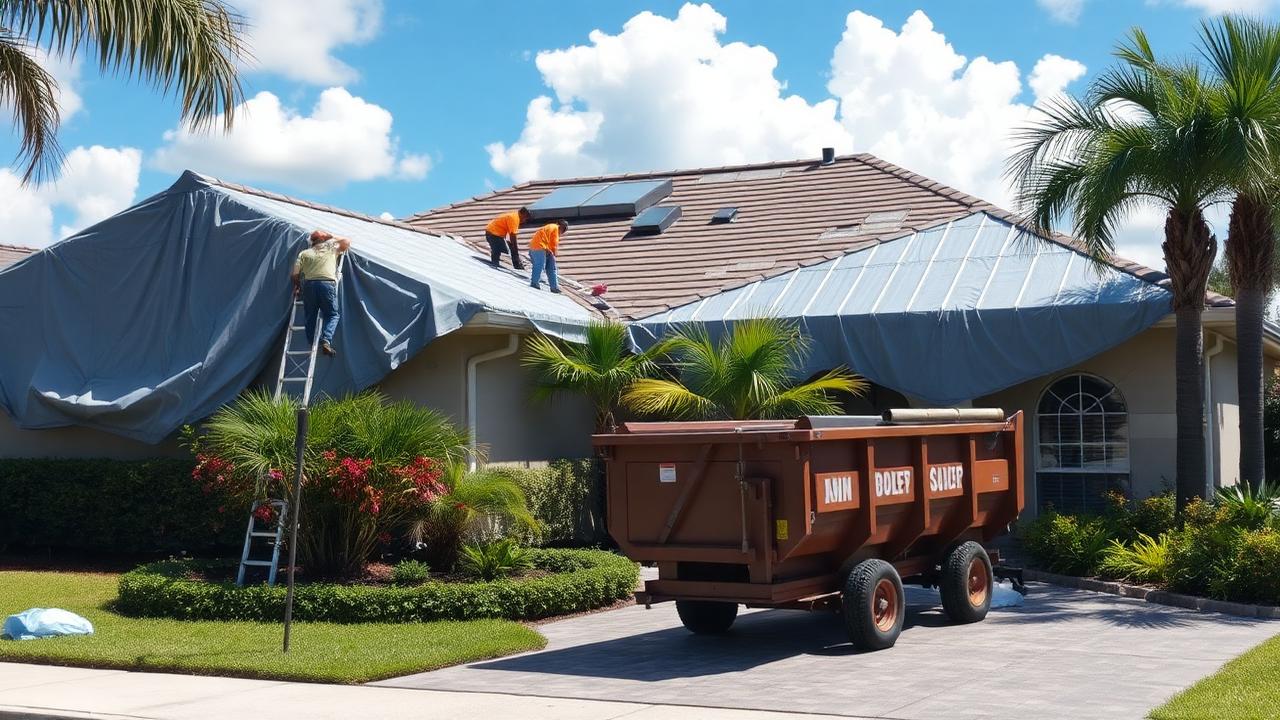
The first hour is protection, and it tells you a great deal about the company. Expect tarps over landscaping and pool cages, plywood against walls where debris will slide, covers over A/C condensers, and mesh or tarping across pool surfaces.
Then the noise starts. Tear-off is the loudest phase, and it is genuinely loud — repeated impact directly on the deck above your living space. Plan for it:
- Working from home? Take calls elsewhere, or schedule them for the late afternoon after tear-off winds down.
- Pets. Dogs and cats find tear-off deeply distressing. Boarding or a friend's house for one or two days is the kindest option.
- Wall hangings. Vibration walks pictures and mirrors off their hooks. Take down anything fragile on second-floor walls and remove items from high shelves.
- Attic contents. Dust and debris fall through deck gaps. Cover or relocate anything stored up there before day one.
Tile tear-offs run longer and heavier than shingle. A tile roof in Beverly Park may take two full days to strip and haul before any new work is visible.
Day 2 to 3: Deck Repair and Dry-In
With the deck exposed, the crew renails to current schedule and replaces any rotted or delaminated plywood. This is where the decking allowance from your estimate becomes real, and where a good contractor photographs each replaced sheet and shows you before it is covered.
Then comes the secondary water barrier — the self-adhered layer that keeps your home dry if the covering ever blows off. Once it is on, your house is watertight even though the roof looks unfinished. The county's dry-in inspection happens at this stage, which sometimes means a quiet day with no crew on site. That pause is required, not neglect.
Day 4 and Beyond: Covering, Metals, and Details
Field installation is the fast, satisfying part. Underneath it, the details that determine whether the roof leaks are being installed: valley metal, wall and counter flashing, new pipe boots, drip edge, and ventilation components. Hips and ridges finish last.
Weather runs the schedule in South Florida. Afternoon convection storms are routine from June through September, and a competent crew watches radar and starts buttoning up before the cell arrives rather than after. Losing a half day to weather is normal; leaving an open deck exposed at 3 p.m. in August is not.
Cleanup Is Part of the Job

The single most common post-job complaint in this industry is nails in tires. A thorough contractor runs a rolling magnet over the driveway, walkways, and the full perimeter of the lawn — not once at the end, but at the close of each working day. Debris in flower beds gets hand-picked. Gutters get cleared of granules and tear-off fragments, which matters because clogged gutters at the finish line undo the drainage work the new roof depends on.
Do your own walk before signing anything: perimeter grass, side yard, pool deck, and behind the A/C unit. Anything missed should be handled the same day.
Communication Standards Worth Insisting On
- A named point of contact with a direct phone number, not a general office line.
- A daily end-of-day text or photo update, especially if you are not home.
- Immediate notification with photos when a hidden condition is found, before extra work proceeds.
- Written change orders with prices, signed before the work happens.
- Confirmed inspection dates as they are scheduled.
If a contractor cannot commit to that on a five-day project, consider how they will respond to a warranty call in year six.
Realistic Duration by Roof Type
| Roof type | Typical active work days | Notes |
|---|---|---|
| Architectural shingle | 3 to 5 | Fastest tear-off and install |
| Concrete or clay tile | 7 to 14 | Heavy disposal, staged loading, longer detailing |
| Standing seam metal | 5 to 10 | Panel fabrication and precise flashing work |
| Low-slope / modified bitumen | 3 to 6 | Drainage and detail-driven |
Add permit review time before the start date and inspection holds inside it. The full calendar window from contract to final inspection is usually several weeks longer than the labor days, which we break down in the roof installation service overview.
Frequently Asked Questions
Do I need to be home during the reroof?
No, but you should be reachable. Decisions about hidden decking damage or unexpected conditions come up mid-day and stall the crew if nobody answers.
Will my ceilings crack?
Minor drywall settling cracks occasionally appear from tear-off vibration, most often on older homes. It is uncommon and cosmetic. Photograph existing ceiling conditions before the job starts so there is no ambiguity afterward.
What happens if it rains overnight mid-project?
Once the secondary water barrier is installed, the home is protected. Before dry-in, the crew tarps any exposed deck at the end of the day. If water does get in, call immediately — that is what emergency roofing services exist for, and your contractor should own the response.
Can I stay in the house with a newborn or someone working night shifts?
You can, but tear-off day is genuinely disruptive. Most families arrange to be elsewhere from roughly 7 a.m. to 4 p.m. on the loudest one or two days.
Work With a Crew That Treats Your Property Like Its Own
PSR Roofing Company of Hollywood protects landscaping and pool areas, photographs every hidden condition before covering it, and sweeps the property daily — not just at the finish. Discuss your project on the roof installation page, or reach our team through the contact page.
Find our Hollywood office: PSR Roofing Company of Hollywood on Google Maps — 3440 Hollywood Blvd, Suite 415, Hollywood, FL 33021. Call (754) 291-4149.
Series navigation: Warranties Explained · Jobsite Guide · Payment Schedules and Financing