
Roofing Contractor Warranties in Hollywood, FL: What's Actually Covered
"Lifetime warranty" is the most oversold phrase in roofing. It appears in nearly every proposal in Broward County, and in most cases it describes something narrower than what homeowners believe they are buying. Understanding the difference before you sign is worth more than any discount a contractor can offer.
Here is how roofing warranties actually work in Hollywood, Florida — what each type covers, what voids them, and how to tell whether the paper you were handed is worth anything in year seven.

This is the third article in our roofing contractor series. If you are still comparing proposals, read what your roofing contractor's estimate really says and permits and inspections in Broward County first.
Two Warranties, Two Very Different Promises
The manufacturer warranty covers materials
If a shingle delaminates, a tile spalls, or a membrane fails from a defect in production, the manufacturer replaces the material. That is the whole promise in a standard warranty. It usually does not pay for tear-off, labor, disposal, or the interior damage the failure caused.
Manufacturer coverage is also prorated in most cases. A 30-year shingle warranty typically pays full material value for an initial period, then declines each year afterward. In year 18, the check may cover a modest fraction of the material cost and none of the labor.
The workmanship warranty covers installation
Here is the part that matters, because the overwhelming majority of South Florida roof failures come from installation, not manufacturing: flashing cut short at a wall, a valley detail rushed, pipe boots reused, fasteners driven at the wrong depth, laps run backward on a low-slope transition.
A workmanship warranty is written by the contractor, backed by the contractor, and only as durable as the company behind it. A 10-year workmanship warranty from a business that has served Emerald Hills, Hollywood Hills, and Hollywood Lakes for two decades is a different asset than the same document from a company formed three months after the last storm.
Enhanced Manufacturer Systems
Major manufacturers offer upgraded coverage — often labeled as system or platinum-tier warranties — that can include labor and, in some cases, contractor workmanship for a set number of years. Two conditions apply almost universally:
- The contractor must be a certified installer for that manufacturer.
- The roof must be installed as a complete system: that manufacturer's underlayment, starter, field material, hip and ridge, and ventilation.
Mixing a premium field shingle with a generic starter strip or a different brand of underlayment is the most common way homeowners lose enhanced coverage without ever being told. If your proposal advertises an upgraded warranty, ask which components are required and confirm each one appears on the estimate by name.
What Voids a Roof Warranty in South Florida
The exclusions list is short and predictable. Every one of these shows up in Broward County claims:
- Unpermitted or uninspected work. No permit record often means no valid claim.
- Third-party penetrations. Satellite installers, solar contractors, and A/C techs who fasten into the roof without coordination.
- Pressure washing. High-pressure cleaning of tile and shingle roofs strips granules and drives water under laps. Use a licensed soft-wash service.
- Inadequate ventilation. Manufacturers explicitly require balanced intake and exhaust. Baked underlayment from an over-hot attic is treated as an installation defect, not a material one.
- Ponding water on low-slope sections. Drainage failures on flat sections are usually excluded unless the system was designed for them.
- Deferred maintenance. Clogged gutters, blocked drains, and overhanging limbs left unaddressed.
- Storm damage. Wind and impact are insurance events, not warranty events. That is a separate conversation with your carrier.
Note the ventilation and drainage items. A roof is a system that includes the attic and the edge, which is why a competent contractor will raise gutter installation and ventilation during the proposal rather than after.
What "Transferable" Really Means
Most workmanship warranties allow one transfer to a buyer, usually within a defined window after closing and sometimes for a small administrative fee. Manufacturer warranties often reduce term length on transfer. If you expect to sell within a decade, ask two questions and get the answers in writing: is it transferable, and what changes when it transfers? A transferable warranty is a genuine selling point in Hollywood's resale market.
The Closeout Package to Demand
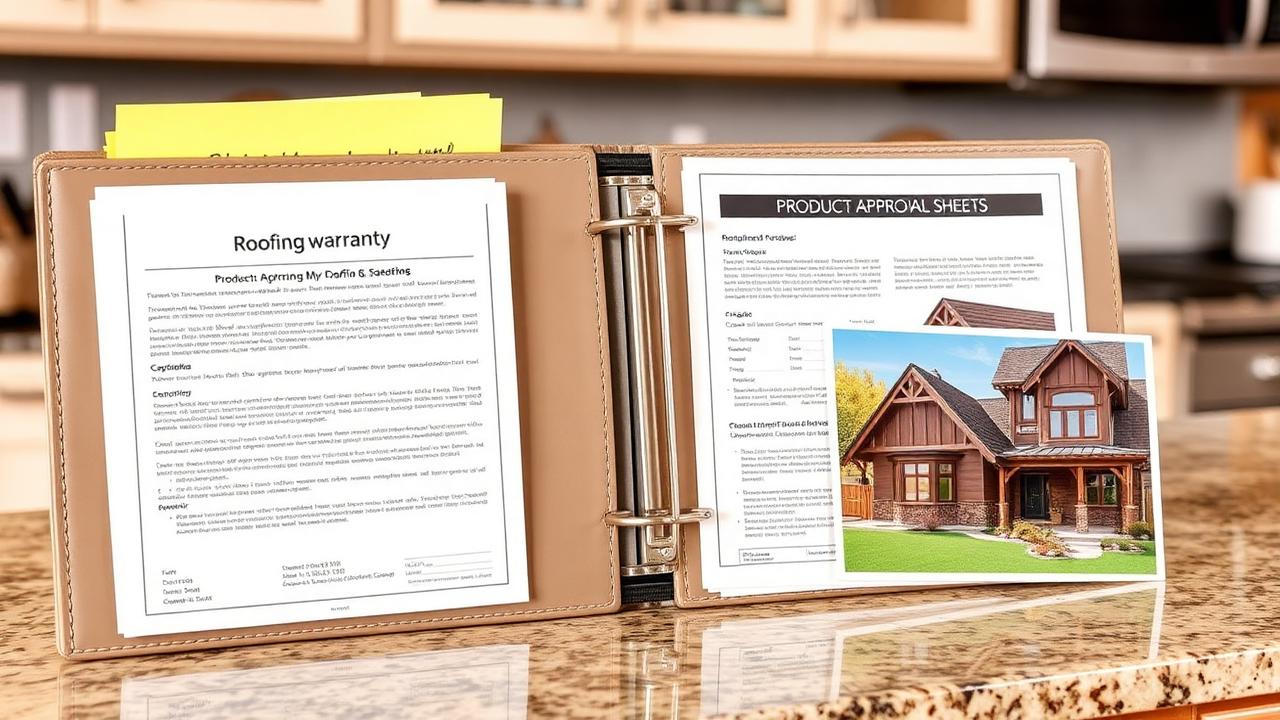
When the job is done and the final inspection passes, ask for one folder containing:
- Signed workmanship warranty with start date, term, and transfer terms
- Manufacturer warranty registration confirmation (registration is often required within a set window — do not assume it happened)
- Permit number and final inspection record
- Product approval or NOA sheets for the installed assembly
- Before, during, and after photographs, including dry-in
- Completed wind mitigation form for your insurance carrier
- Paid-in-full invoice and lien release
Keep it digitally. In eight years, when a stain appears on a ceiling, that folder is the difference between a covered warranty repair and an out-of-pocket roof repair.
How to Make a Warranty Claim Without Losing It
Call the contractor first, in writing, as soon as you see a problem. Photograph the interior and exterior. Do not have another company work on the roof before the warranting contractor inspects it — unauthorized repairs are a standard exclusion. If the leak is active and threatening the interior, document that you called and had emergency stabilization performed, and keep the invoice separate from any permanent repair.
Most reputable contractors treat warranty calls as reputation events and respond quickly. Slow response to a warranty call is exactly the behavior you were trying to screen out during the bidding stage.
Frequently Asked Questions
How long should a workmanship warranty be in Florida?
Terms vary widely. Five to ten years is common for a full replacement, with longer terms available under certified manufacturer system programs. What matters as much as the number is whether the company is likely to be answering the phone at the end of it.
Does a warranty cover leaks after a hurricane?
Generally no. Wind and debris damage is an insurance matter. A warranty covers defects in materials or installation under normal conditions.
Do I need to register the manufacturer warranty myself?
Sometimes. Many programs require registration within a window after completion. Ask your contractor for written confirmation that it was submitted, and keep the confirmation.
Does an annual inspection help my warranty?
Yes, in two ways. It creates a maintenance record that undercuts a "deferred maintenance" denial, and it catches small failures early. A documented roof inspection once a year is inexpensive insurance on a large investment.
Get Warranty Terms in Writing Before Work Starts
PSR Roofing Company of Hollywood provides a written workmanship warranty, registers manufacturer coverage on your behalf, and delivers a full closeout package with permit records and photo documentation. Talk to us about your roof replacement options, or reach our team through the contact page.
Find us: PSR Roofing Company of Hollywood on Google Maps — 3440 Hollywood Blvd, Suite 415, Hollywood, FL 33021. Call (754) 291-4149.
Series navigation: Permits and Inspections · Warranties Explained · What Happens on the Jobsite