
Roof Installation Timeline in Hollywood, FL: A Day-by-Day Walkthrough
Once the contract is signed, the question changes from "what will it cost?" to "what is actually going to happen at my house?" A roof installation in Hollywood, Florida is a coordinated sequence of permitting, deliveries, inspections, and crew days — and knowing the sequence removes most of the stress.
If you have not yet worked through pricing, start with our breakdown of what drives roof installation cost in Hollywood, then come back here.
The Short Answer
For a typical single-family home in Emerald Hills, Hollywood Lakes, Driftwood, or Playa del Mar, the crew is usually on the roof for two to five working days. The full calendar timeline — from signed contract to passed final inspection — commonly runs three to four weeks, because permitting and inspection scheduling happen around the physical work, not during it.
Tile and metal systems sit at the longer end. Straightforward shingle replacements on simple rooflines sit at the shorter end.
Phase 1: Permitting and Preconstruction (Days 1–10)
Your licensed contractor submits the permit application to the City of Hollywood Building Division with product approval documentation. Nothing happens on the roof during this window, but three things should be happening off it:
- Material ordering. Specific tile profiles and metal panel colors carry lead times; standard architectural shingles usually do not.
- Color and profile confirmation. Final sign-off in writing avoids the single most common change order.
- Site logistics. Dumpster placement, material staging, and driveway access are planned. In gated communities such as Emerald Hills, association notification may be required.
Phase 2: Delivery and Setup (Day 1 On-Site)
Material is delivered and, on most homes, loaded directly onto the roof or staged in the driveway. Crews arrive early — typically between 7:00 and 8:00 a.m., which is standard practice in South Florida to work ahead of afternoon heat and storms. Ground protection goes down over landscaping, pool cages, and A/C units.
What to do the day before: move vehicles out of the driveway, take down fragile wall hangings (vibration travels), secure patio furniture, and plan for pets to be in a quiet interior room or away from the property.
Phase 3: Tear-Off (Days 1–2 On-Site)
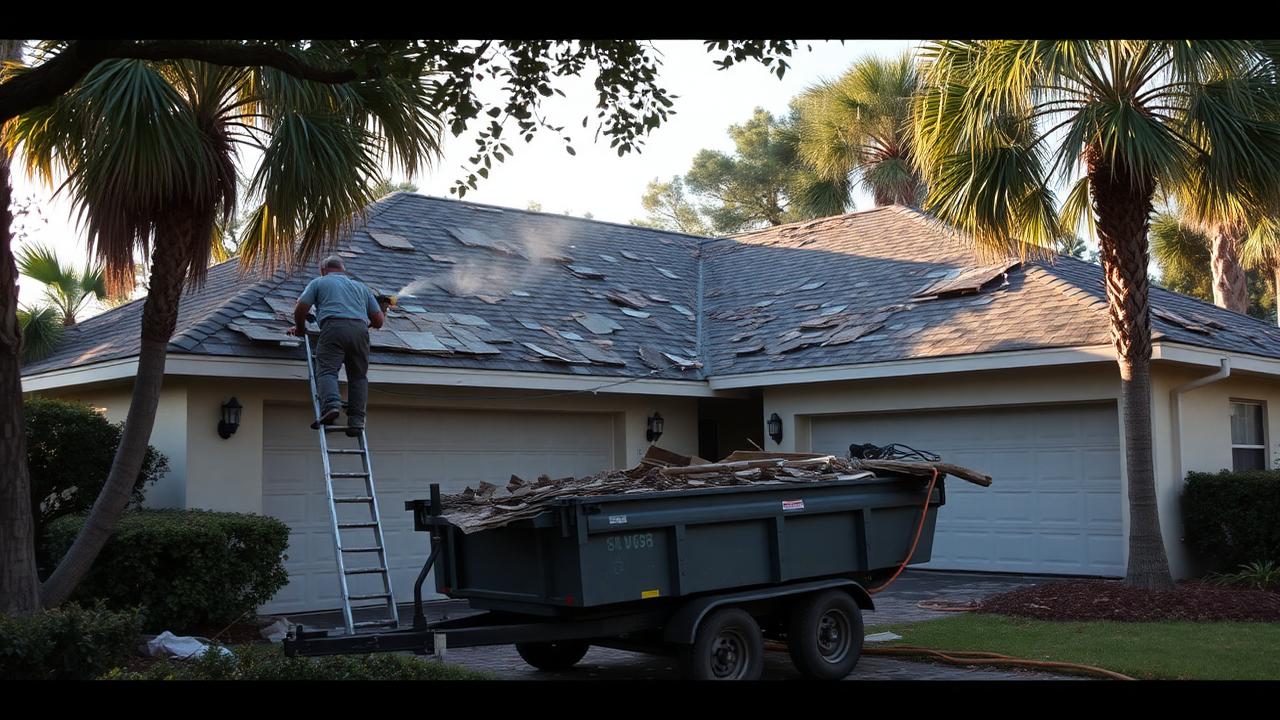
The existing roof comes off down to the deck. This is the loudest, dustiest phase and it is also the most revealing: rotted sheathing, previous unpermitted repairs, and inadequate fastening all surface here. Your contractor should photograph anything discovered and issue a written change order before proceeding.
Tile tear-off takes noticeably longer than shingle tear-off because of weight and disposal handling — a factor covered in our comparison of overlay vs. tear-off roof installation.
Phase 4: Deck Inspection (Add 1 Calendar Day)
Broward County requires the exposed deck to be inspected before the roof is dried in. This is a scheduling dependency, not a labor day: the crew stops until the inspector arrives. Any replaced sheathing must be in place and correctly fastened.
Do not be alarmed if a full day passes with no visible activity. Inspection windows are set by the municipality, not the contractor.
Phase 5: Dry-In and Secondary Water Barrier (Day 2–3 On-Site)
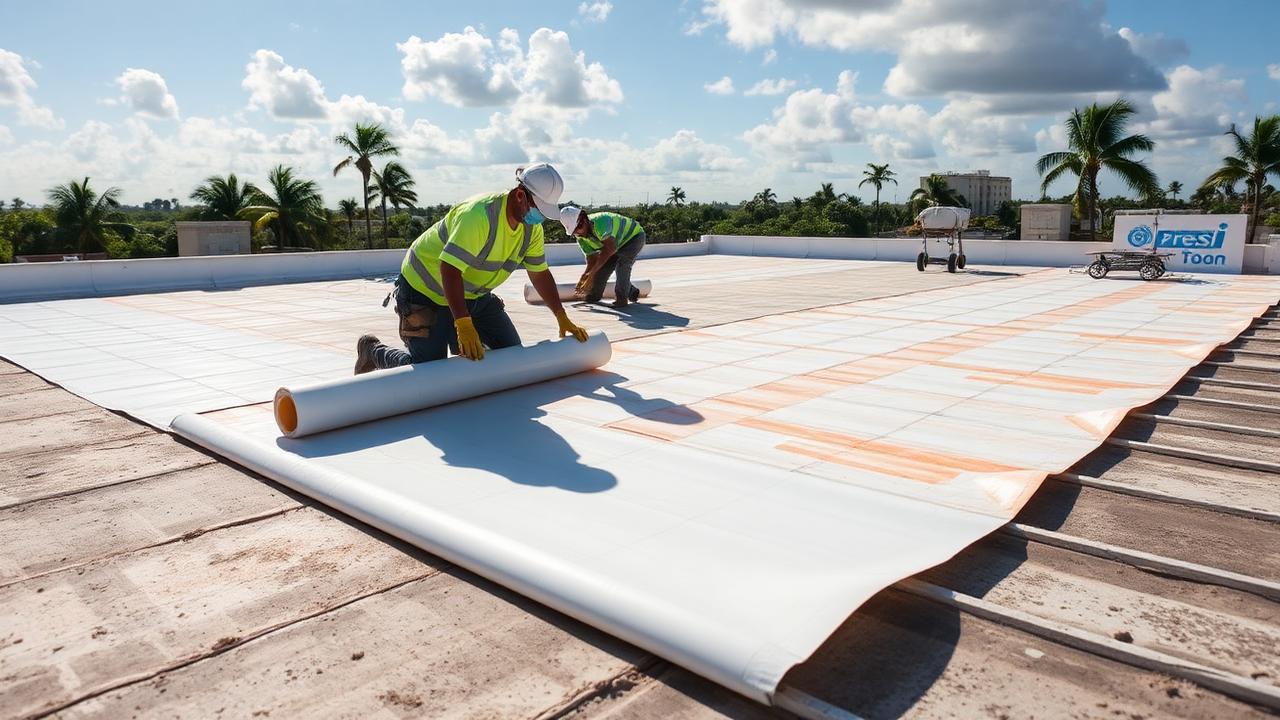
After the deck passes, the self-adhering secondary water barrier is applied across the entire deck surface. This is the layer that keeps wind-driven rain out when the primary material is compromised in a storm — and it is why HVHZ roofs cost more than roofs in inland markets.
Once dry-in is complete, your home is weather-tight even if the primary material has not been installed yet. Many Hollywood homeowners find this the most reassuring milestone of the project.
Phase 6: Flashing, Drip Edge, and Penetrations (Day 3)
Metal flashings at walls, chimneys, skylights, and plumbing penetrations go in before the field material. This is detail work, and it is where most future leaks are prevented or created. If your project includes drainage upgrades, gutter installation is coordinated after the eave details are finalized.
Phase 7: Primary Material Installation (Days 3–5)
Shingles, tile, or panels are installed from eave to ridge using the fastening pattern required by the product's approval documentation — often six nails per shingle in the HVHZ rather than the four common elsewhere. Tile installation typically adds one to two days over shingle. Standing-seam metal requires precise panel layout and adds time on complex rooflines.
Phase 8: Ridge, Ventilation, and Cleanup (Final Crew Day)
Ridge caps and ventilation components complete the assembly. Correct intake-to-exhaust balance is set here, and it materially affects how hot your attic runs for the next two decades — see roof installation and attic ventilation.
The crew then performs debris removal and runs magnetic rollers across the lawn, driveway, and planting beds to collect stray fasteners.
Phase 9: Final Inspection and Closeout (Days 19–22 Calendar)
The municipal inspector verifies fastener patterns, flashings, ridge detail, and ventilation. Once the permit is closed, request your closeout package: permit final documentation, product approval numbers, manufacturer warranty registration, and workmanship warranty. You will need these for resale and for your insurer, as explained in our wind mitigation and insurance guide.
What Commonly Extends the Schedule
| Delay Source | Typical Impact | How to Reduce It |
|---|---|---|
| Permit review backlog | 3–10 days | Complete application with current product approvals |
| Afternoon storms (June–November) | Half to full days | Schedule outside peak season when possible |
| Unexpected deck damage | 1–2 days | Pre-agreed per-sheet allowance |
| Special-order tile or metal color | 1–3 weeks | Confirm selections at contract signing |
| Inspection scheduling | 1–2 days per inspection | Nothing — build a buffer |
Living Through It: Practical Notes
Work generally runs into the early afternoon. Expect vibration indoors, intermittent dust in the attic, and limited driveway access. Air conditioning continues to run normally. If a family member works from home on calls, plan the loudest days — tear-off and fastening — accordingly.
If a leak develops mid-project due to an unexpected storm, your contractor should respond immediately; that is precisely what emergency roofing services exist for.
Frequently Asked Questions
Can a roof installation be done in one day?
Small, simple shingle roofs occasionally are, but Broward County's required deck inspection between tear-off and dry-in usually makes a true single-day installation impractical on a permitted project.
Do I need to leave the house?
No. Most homeowners stay. Plan pet arrangements and consider a workspace away from the loudest phases.
What happens if it rains?
After dry-in, your home is protected. Before dry-in, crews tarp the exposed deck at the end of each day and pause work rather than roof over wet sheathing.
Next Step
Want a schedule tailored to your roofline and neighborhood? Contact PSR Roofing Company of Hollywood or view our roof installation services.
Continue the series: Overlay vs. Tear-Off Roof Installation → · ← Roof Installation Cost in Hollywood