
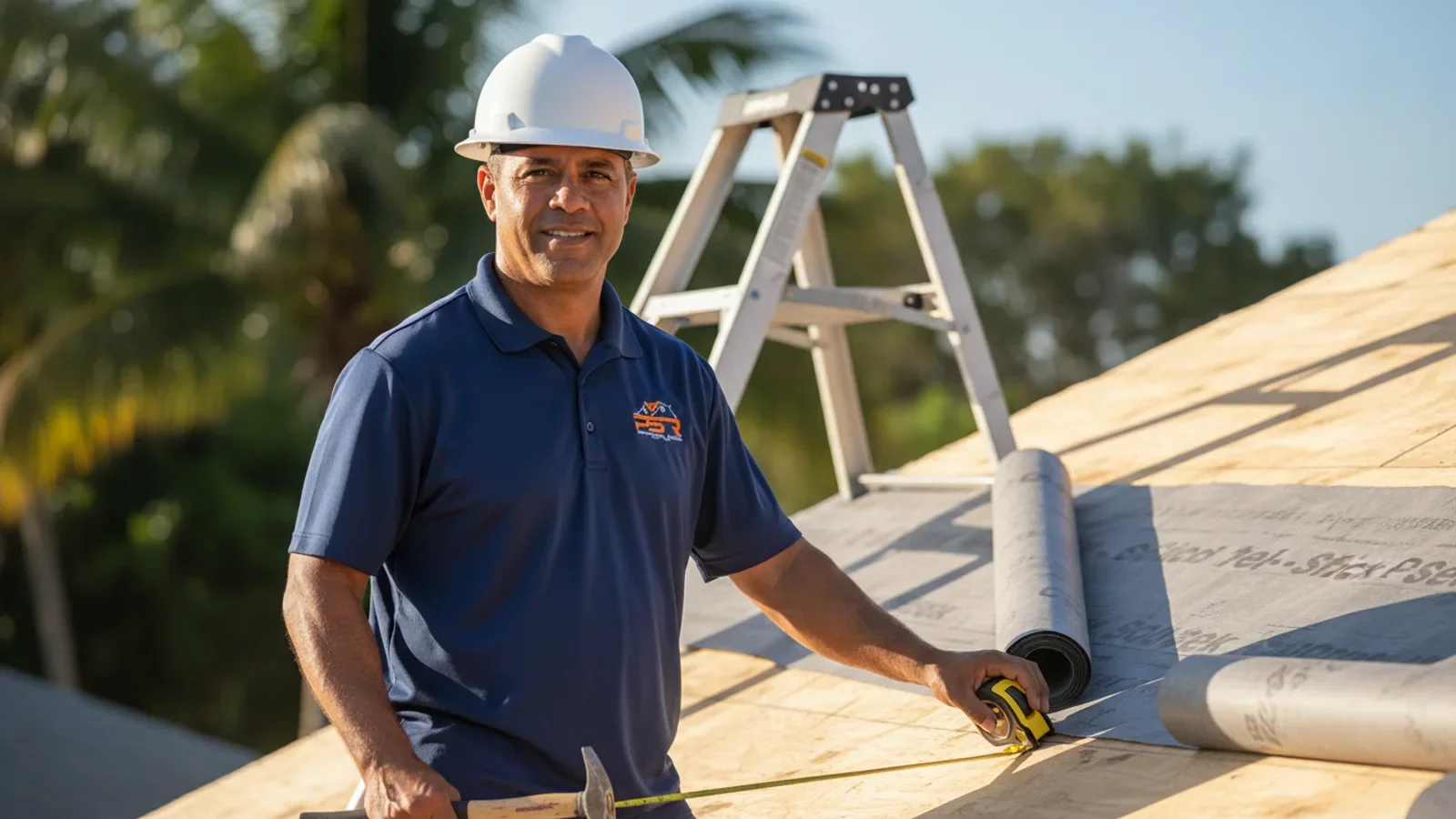
Professional Roof Installation in Hollywood FL
You step out onto your patio after a heavy summer downpour and notice a damp, earthy smell lingering near your foyer. Back inside, you look up to find a faint, tea-colored ring spreading across your ceiling drywall. In South Florida, these small warnings often point to a much larger reality: your home is ready for a new roof. A complete roof installation in Hollywood FL is one of the most significant investments you can make in your property, serving as your primary defense against intense sun, tropical downpours, and seasonal windstorms.
Navigating a new installation requires understanding how local building codes, material choices, and installation practices impact the longevity of your system. This comprehensive guide walks you through the entire process, helping you make informed decisions for your home. From initial inspection to the final inspection sign-off, here is what you need to know about installing a durable, high-performance roof in Broward County.
If you are already noticing signs of wear, you can read about the signs of roof damage after storms to determine if immediate action is required, or request a professional assessment to evaluate your system.
The Hollywood FL Roofing Environment: Weather and Building Codes
Hollywood, Florida, presents a unique set of challenges for residential and commercial roofing systems. Nestled between the Atlantic Ocean and the Everglades, our local climate subjects properties to high humidity, intense ultraviolet radiation, salt-spray air, and severe convective storms. These factors accelerate the aging process of standard materials, making proper installation technique absolutely critical.
Because of our geographic location, Hollywood falls within the High-Velocity Hurricane Zone (HVHZ) under the Florida Building Code. This regulatory environment is among the strictest in the nation, requiring roofing systems to withstand wind loads of up to 170 mph or more, depending on the specific building height and exposure category. Every component of a new roof, from the size and spacing of the nails to the thickness of the underlayment, must meet these rigorous standards. Obtaining local building permits and passing municipal inspections are mandatory steps that ensure your family and property remain protected during major storm events.
Selecting the Right Materials for South Florida Homes
Choosing the correct material for your roof installation involves balancing architectural style, budget, and long-term durability. The materials used must not only look appealing but also withstand constant UV exposure and thermal expansion.
Asphalt Shingles: Modern architectural shingles are engineered to provide strong wind resistance when installed with high-wind nailing patterns. They offer a traditional aesthetic and are a highly cost-effective option, though they generally have a shorter lifespan in tropical climates compared to heavier materials.
Concrete and Clay Tiles: Extremely popular throughout Hollywood neighborhoods, tile roofs offer exceptional longevity and natural resistance to rot and insect damage. They provide excellent thermal insulation, helping to keep cooling costs manageable during hot summer months. However, because of their weight, a structural engineer must verify that your home can support them.
Metal Roofing: Standing seam metal panels are increasingly favored for their sleek, modern appearance, exceptional wind uplift ratings, and reflective properties. They shed water rapidly and reflect solar heat, making them an energy-efficient choice for coastal climates.
To explore the pros and cons of these options in greater detail, you can consult our guide on choosing Florida roofing materials.
Step-by-Step Roof Installation Process
A successful roof installation relies on a systematic, multi-step process. Skipping or rushing any of these stages can compromise the structural integrity of the entire system.
1. Pre-Installation Inspection and Permitting
Before any physical work begins, a detailed inspection of the existing structure is performed. This includes checking the attic space for signs of water intrusion, assessing the condition of the fascia and soffit boards, and calculating the ventilation requirements. Simultaneously, detailed engineering drawings and product approval sheets are compiled to secure the necessary permits from the City of Hollywood building department.
If you want it handled correctly the first time, consider professional roof installation.
2. Complete Tear-Off and Decking Preparation
The old roofing material must be completely removed down to the bare wood deck. This step is non-negotiable under modern Florida building codes, as it allows installers to identify and replace any rotted, water-damaged, or structurally weakened plywood sheets. The clean deck is then re-nailed to meet current wind-uplift fastening schedules, which typically require specific spacing of ring-shank nails along the roof trusses.
3. Installing Underlayment and Flashing
The underlayment serves as the secondary water barrier and is arguably the most critical component of the system. In South Florida, a self-adhering (peel-and-stick) membrane is commonly applied directly to the wood deck. This ensures that even if the primary shingles or tiles are damaged during a storm, water cannot penetrate the home. Corrosion-resistant metal flashing is then secured along the valleys, eaves, rake edges, and chimneys to redirect water away from vulnerable joints.
4. Applying the Primary Roofing Material
With the deck sealed and protected, the primary material is installed. Whether laying architectural shingles, setting clay tiles in place with approved adhesive foams and mechanical fasteners, or locking standing-seam metal panels together, installers must adhere strictly to the manufacturer's high-wind installation instructions. This step requires precision to ensure proper alignment and aesthetic appeal.
5. Ridge Ventilation and Final Cleanup
Proper attic ventilation is essential for controlling heat buildup and moisture levels inside your home. Ridge vents are installed along the peaks of the roof to allow hot air to escape naturally. Finally, the job site is meticulously cleaned, using magnetic sweeps to collect stray nails and debris, followed by a final inspection to verify compliance with all local building codes.
Comparing Roofing Options for Hollywood Homeowners
The following table provides a general comparison of the most common roofing systems installed in our coastal environment to help you evaluate your options:
| Roofing Material | Average Lifespan in FL | Wind Resistance Rating | Primary Benefit |
|---|---|---|---|
| Architectural Shingles | 15 to 20 Years | Up to 110-130 mph | Affordable upfront cost and easy repairs |
| Concrete/Clay Tile | 30 to 50 Years | Up to 150+ mph | Classic Mediterranean style and high durability |
| Standing Seam Metal | 40 to 60 Years | Up to 160+ mph | Excellent solar reflection and wind uplift resistance |
Understanding New Roof Investment Factors
The cost of a roof installation is influenced by several variables specific to your property. Understanding these drivers helps you compare proposals and plan your budget effectively without surprises.
First, the overall size and complexity of your roof play a major role. A simple gable roof with two flat slopes requires less labor and waste material than a multi-level hip roof with intersecting valleys, dormers, and steep pitches. Second, the condition of your existing roof deck cannot be fully known until the old materials are removed. If extensive wood rot is discovered in the plywood decking or structural rafters, this wood must be replaced to ensure a safe foundation, which will adjust the overall scope of work.
Additionally, the accessibility of your home can impact labor efficiency. Homes with tight property lines, overhead power lines, or dense landscaping may require specialized material handling equipment or extra manual labor. For a deeper breakdown of these cost components, you can read our guide on Hollywood roof replacement cost factors.
Many local homeowners rely on expert roof installation for exactly this.
What to Ask Before Hiring a Roofing Contractor
A roof is only as good as the team installing it. Because a new roof must protect your home for decades, selecting a qualified professional is the most important decision you will make. It is vital to verify that any contractor you consider holds a valid state license and carries adequate general liability and workers' compensation insurance specifically for roofing work.
Always ask for references from recent local projects and verify that they are familiar with the specific permitting requirements of Broward County and the City of Hollywood. Knowing what questions to ask can save you from poor workmanship and administrative headaches. Consider reviewing our suggested list of questions to ask Hollywood roofers before signing any agreement.
Once your new roof is successfully installed, protecting your investment is the next step. Implementing a routine maintenance schedule will help maximize the service life of your system. Learn more about maintaining your new roof by reading our guide on post-installation roof care in Hollywood.
Frequently Asked Questions
How long does a roof installation typically take in Hollywood?
For an average-sized single-family home, a standard shingle installation usually takes between two to four days of active on-site work. Tile and metal roof installations are more labor-intensive and typically require one to two weeks, depending on weather conditions and the scheduling of municipal inspections.
Can I install a new roof over my existing shingles to save money?
No. Under the Florida Building Code, particularly within the High-Velocity Hurricane Zone, a complete tear-off of all existing roofing materials down to the bare wood deck is required. This ensures the structural deck can be inspected, re-nailed to current wind-uplift codes, and properly sealed with an approved underlayment.
How do I know if I need a full installation or just a repair?
If your roof is approaching the end of its typical lifespan and experiencing widespread issues such as extensive tile breakage, curling shingles, or multiple active leaks, a full installation is usually the most reliable and cost-effective long-term solution. For localized damage on a relatively young roof, a targeted professional roof repair may be sufficient to resolve the issue.
Will a new roof help reduce my home insurance premiums?
Yes. Installing a new roof that complies with the current Florida Building Code often qualifies you for significant wind mitigation discounts on your homeowners insurance. Features like secondary water barriers, hurricane clips, and wind-resistant materials help reduce risk, which insurers frequently reward with lower premiums.
Secure Your Home with a Durable New Roof
A professionally installed roof provides lasting peace of mind, protecting your family, your belongings, and your home's structural integrity from South Florida's volatile weather. By selecting high-quality materials and ensuring your system is installed in strict compliance with local building codes, you secure your property's value for decades to come.
If you are ready to evaluate your home for a new roof or need a professional assessment of your current system, contact PSR Roofing Company of Hollywood today to schedule an on-site consultation with our experienced local team.
Explore this guide
- In this guideSigns of Roof Damage After Storms in Hollywood, FL›
- In this guideBest Roofing Materials for South Florida | Hollywood Guide›
- In this guideHollywood Roof Replacement Cost Factors Explained›
- In this guideHow to Choose a Local Roofer in Hollywood FL: Vet Guide›
- In this guideHow to Maintain a New Roof in Hollywood FL | Care Guide›