
Recognizing Key Signs of Roof Damage After Storms in Hollywood, FL
Data from weather monitoring systems shows that South Florida wind gusts during major summer storms frequently exceed 60 miles per hour, pushing building materials to their absolute physical limits. In Hollywood, Florida, where coastal humidity and intense wind-driven rains collide, the impact of these extreme weather events on residential properties can be devastating. Immediate, thorough post-storm evaluations are critical for preventing minor structural weak spots from developing into widespread interior damage.
How Do You Safely Inspect Your Property for Signs of Roof Damage After Storm?
Conducting an initial inspection after a severe weather event should always begin from the safety of the ground. Homeowners can use binoculars to scan the roofline, gables, and valleys without putting themselves at risk on a ladder. Look closely for any visible distortions in the roof plane, sagging sections, or large debris that may have impacted the surface. Walking the perimeter of the entire home allows you to check for fallen materials, such as broken tile fragments or asphalt shingles, which often collect in the yard or near downspouts.
It is highly recommended to inspect your attic spaces if you can safely access them. Bring a high-powered flashlight and look for water dripping, damp rafters, or dark water stains on the underside of the roof decking. If you observe structural shifting, daylight peeking through the roof boards, or extensive water intrusion, the integrity of your home is compromised. In these severe cases, it is critical to consult a professional about a comprehensive roof installation to ensure your household remains protected against the next major coastal storm.
What Visual Clues Indicate Metal Roof Failure Following High Winds?
Metal roofing is highly valued in coastal Florida for its durability, but extreme wind uplift can still cause structural failure. One of the most common signs of roof damage after storm events on metal systems is fastener back-out. When powerful winds flex the metal panels, the screws securing the metal to the wood decking can loosen, breaking the watertight seal. Look closely along the seams and panels to see if any screws are raised, missing, or surrounded by small rings of rust.
Another clear indicator is panel separation or crimp failure. Strong wind gusts can slip under the edges of metal panels, pulling them upward and bending the seams. If you notice any fluttering noises during normal breezy days or visibly lifted edges along the eaves and ridges, the system has lost its wind resistance. This compromised state allows water to drive directly beneath the metal underlayment, rotting the wood structure below. Understanding how different materials respond to local coastal elements is an essential part of choosing Florida roofing materials that can withstand long-term wind and moisture exposure.
How Do Shingle Roofs Show Storm Damage in Coastal Florida?
If you want it handled correctly the first time, consider professional roof installation.
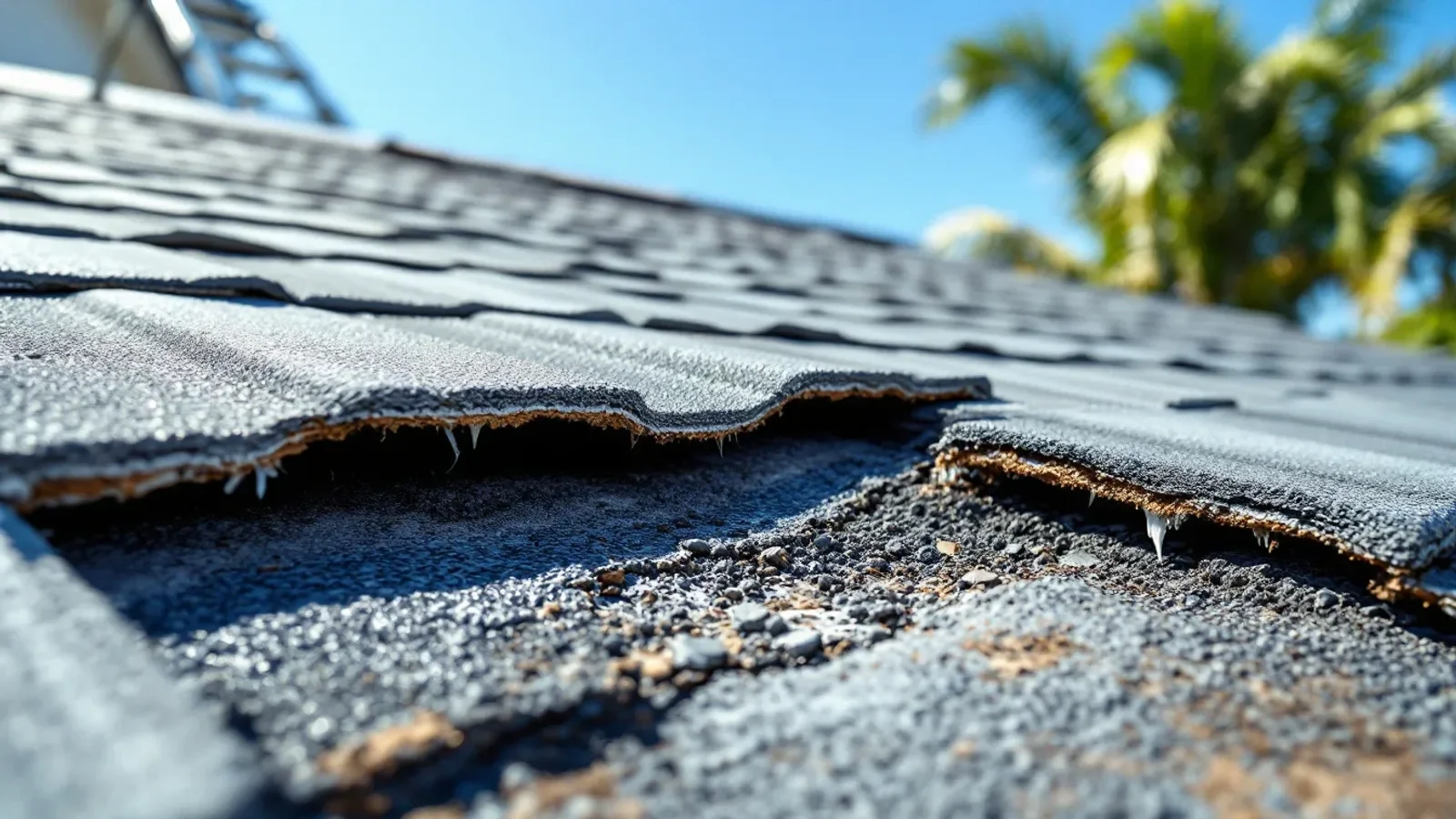
Asphalt shingle roofs are particularly susceptible to wind uplift and impact damage during severe weather. After a storm passes, look for missing, creased, or torn shingles. High winds can lift shingles up, breaking the adhesive sealant strip that bonds them together. Even if a lifted shingle settles back down, the seal is broken, and a crease line will often form across the top where the shingle folded backward. These creased shingles are highly vulnerable to tearing off completely in the next storm.
Granule loss is another critical indicator of shingle deterioration. Heavy rain and hail strip the protective mineral granules off the asphalt layer, exposing the raw bitumen to the harsh Florida sun. Check your gutters and the ground beneath your downspouts for accumulated piles of dark sand-like granules. If the shingles look bald or splotchy, their UV protection is gone, and they will rapidly degrade, crack, and leak. If your shingle system is showing widespread baldness and wind lift, it may be time to examine the core hollywood roof replacement cost factors to plan for a secure, long-term replacement.
What Signs of Tile Roof Damage Should You Look For?
Concrete and clay tile roofs are incredibly heavy and durable, but they are vulnerable to impact from flying debris and severe wind vibrations. Cracked, chipped, or completely missing tiles are the most obvious signs of storm damage. Even a hairline crack in a single tile can allow water to seep through to the underlying waterproof membrane, which is the actual barrier keeping your home dry. If that membrane is aged or damaged, a leak will develop quickly.
You should also look for slipped or displaced tiles. During intense wind storms, the mechanical fasteners or adhesive foam holding the tiles in place can fail, causing tiles to slide out of alignment. This creates open gaps where rain can directly penetrate the roof system. If you see tiles that look crooked, are hanging over the eaves, or if you find broken pieces of concrete or clay in your yard, your tile roof needs immediate professional attention to prevent cascading water damage to the structural sheathing below.
Why Are Hollywood Homes Uniquely Vulnerable to Post-Storm Roof Rot?
The local climate and housing stock in Hollywood, Florida, create a perfect storm for rapid roof decay following severe weather. Many residential neighborhoods feature homes built in the mid-to-late 20th century. These older structures were often constructed under historical building codes that did not require the robust hurricane strapping, secondary water barriers, and ring-shank nailing patterns mandated by today's strict Florida Building Code. Over decades of exposure, the structural timber in these older roofs naturally weakens, making them far more susceptible to wind uplift and structural shifting during tropical storms.
Many local homeowners rely on expert roof installation for exactly this.
Furthermore, Hollywood's intense humidity and high water table mean that once moisture penetrates a storm-damaged roof, it has very little opportunity to dry out naturally. Trapped moisture in the attic space, combined with average summer temperatures exceeding 90 degrees, creates an aggressive greenhouse effect. Mold, mildew, and wood-rot fungi can compromise roof trusses and plywood sheathing within just days of a storm. This rapid decay process makes early detection of storm damage absolutely vital for Hollywood homeowners wishing to avoid costly structural failures.
How Can You Identify Sagging or Structural Movement After a Storm?
Structural shifting is one of the most dangerous results of severe storm winds and heavy water saturation. To identify sagging, step back from your home and look at the ridge line of your roof. The ridge should be perfectly straight. If you notice any dips, bows, or a general swayback appearance, it indicates that the underlying rafter system or roof trusses have shifted, cracked, or are failing under the weight of water-logged materials.
Inside the home, look for drywall cracking along the ceilings and upper walls, especially around door frames and windows. Doors that suddenly stick or refuse to close properly after a major storm can also indicate that the roof load has shifted or that moisture has caused the framing timber to swell. If you observe any of these structural warning signs, do not wait for the next rainfall. You should immediately contact a professional to schedule a detailed storm damage inspection to assess the integrity of your home's support structure.
What Does Gutter and Soffit Damage Tell You About Your Roof's Health?
Your gutters, fascia, and soffits form a unified system designed to channel massive volumes of water away from your home's foundation and walls. When a storm hits, this system is often the first line of defense to fail. Inspect your gutters to see if they are sagging, pulling away from the roofline, or overflowing. Overflowing gutters can back water up under the edge of your roof shingles, rotting the fascia boards and causing water to leak directly into your soffits and ceilings.
Ready for the next step? Learn how roof installation services can help and reach out to the team.
Soffits, the ventilated panels under your roof's overhang, are highly susceptible to wind blowout. Strong winds can rip these panels out of place, allowing wind-driven rain to enter your attic space from below. If you notice missing soffits, water stains on your exterior walls, or gutters hanging loose, the perimeter of your roof is compromised. This damage allows water to seep into the roof edge, leading to hidden rot that can slowly destroy the roof sheathing without ever showing an obvious drip inside your living room.
How Do Hidden Leaks and Ceiling Stains Reveal Storm Failures?
Not all storm damage is immediately visible from the outside. Often, the first sign of a compromised roof is a subtle change on your interior ceilings and walls. Look closely for faint, light-brown or yellow water stains, bubbling paint, or peeling wallpaper. These signs indicate that water has bypassed your outer roofing material, saturated the underlayment, soaked through the attic insulation, and finally reached your drywall.
Pay close attention to corners, the areas around chimney structures, and locations near roof vents. Water often travels along rafters before dripping down, meaning the leak on your ceiling may be several feet away from the actual hole in your roof. If you smell a musty, damp odor in your attic or upper-floor closets, or if you notice your air conditioning system is working harder to combat indoor humidity, moisture is actively entering your home. Leaving these hidden leaks unaddressed can lead to severe structural decay and costly interior remediation.
What Action Steps Should You Take Immediately After Finding Storm Damage?
If your inspection reveals any signs of roof damage after storm winds and rain, taking prompt action is key to protecting your property. First, document everything thoroughly. Take clear, well-lit photos and videos of all damaged areas from the ground, as well as any interior ceiling stains or debris in your yard. This visual evidence is invaluable when filing an insurance claim. Avoid attempting to climb onto a wet, compromised roof yourself; instead, focus on securing your valuable interior belongings and clearing water from living spaces.
Next, contact a professional to schedule a detailed, hands-on structural assessment. A qualified roofing contractor can install temporary tarps or emergency coverings to prevent further water intrusion while you work through the insurance and repair process. If you are dealing with extensive wind damage, structural sagging, or a roof that has reached the end of its functional life, transitioning to a modern, professionally installed roofing system is the safest way to secure your home. Schedule a comprehensive consultation with PSR Roofing Company of Hollywood to restore your home's safety and long-term storm resilience.
Continue reading
- Complete guideRoof Installation Hollywood FL | Complete Professional Guide›
- RelatedBest Roofing Materials for South Florida | Hollywood Guide›
- RelatedHollywood Roof Replacement Cost Factors Explained›
- RelatedHow to Choose a Local Roofer in Hollywood FL: Vet Guide›
- RelatedHow to Maintain a New Roof in Hollywood FL | Care Guide›