
Roof Care
Roof Replacement vs Repair in Hollywood FL: How to Decide
Repair or replace your Hollywood, FL roof? Learn the real signs, storm red flags, and what drives the decision. Book a roof inspection with PSR Roofing.
Roof Replacement vs Repair in Hollywood, FL: A Homeowner's Decision Guide
A drip in the hallway ceiling after an August downpour raises one question fast: patch it or replace the whole roof? For homeowners weighing roof replacement vs repair in Hollywood, FL, the answer depends on age, material, damage pattern, and what our salt air and storms have already done. This guide walks through the signals we look for on real Broward County roofs, so you can make the call with clear eyes.
The short version
Most roofs don't need replacing when they first leak. Many do need replacing before they leak badly. That gap is where homeowners get stuck.
Repair makes sense when the problem is local
If the damage is confined to one area, a repair is usually the smart move. Think a few cracked tiles near a valley, lifted shingles along one edge, a failed pipe boot, or flashing that pulled loose around a chimney or wall. The rest of the roof is sound, the underlayment is holding, and the deck is dry. In that case, fixing the specific failure restores protection without paying for a full tear-off.
Replacement makes sense when the problem is the system
Some roofs fail everywhere at once, just slowly. Granules wash off shingles across every slope. Underlayment beneath tile has aged out under the whole field. Leaks show up in new spots every rainy season. When the roof itself is the problem, individual repairs start chasing symptoms. You spend money, and the next storm finds the next weak point.
The gray zone in between
Plenty of Hollywood roofs sit in the middle: a mid-life roof with moderate storm damage on one or two slopes. Here the decision turns on details an inspection reveals, like deck condition, underlayment age, and whether matching materials are still available. That's why we recommend a professional look before committing either way.
Why South Florida roofs age differently
Here's the part national roofing advice gets wrong. A roof's rated lifespan on the packaging and its actual lifespan in Hollywood are often two different numbers.
Sun, salt, and humidity
Intense year-round UV dries out asphalt and breaks down sealants faster than in milder climates. Homes closer to the beach and the Intracoastal also deal with salt air, which corrodes metal fasteners, flashing, and drip edge. Add near-constant humidity and you get conditions that favor algae streaking and trapped moisture in the attic. None of this shows up overnight. It accumulates.
Wind-driven rain is a different animal
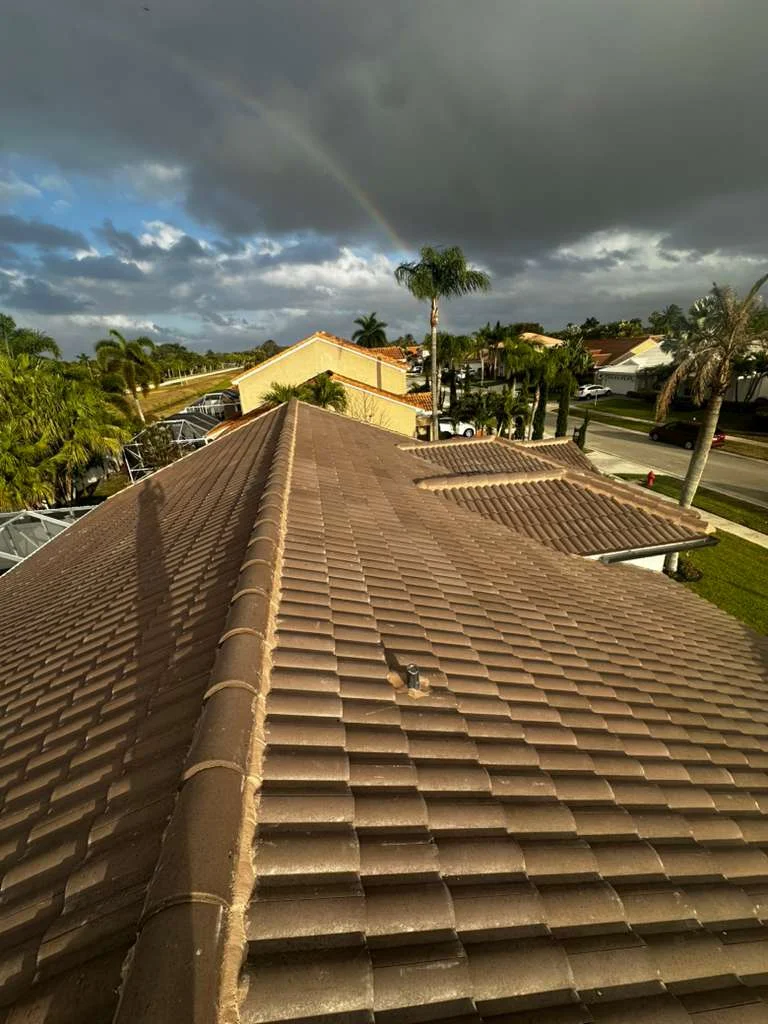
Our storms don't just drop water straight down. Tropical systems and summer squalls push rain sideways and upward, under tile edges and shingle tabs, into spots that stay dry in a normal shower. A roof that handles gentle rain fine can leak in a strong easterly blow. That's often the first hint that underlayment or flashing is nearing the end.
Typical lifespans in our climate
The ranges below are commonly cited for South Florida conditions. Treat them as rough guides, not deadlines. Installation quality, ventilation, and maintenance swing them a lot.
| Roof type | Commonly cited lifespan in South Florida | What usually fails first |
|---|---|---|
| Asphalt shingle | About 15 to 20 years | Granule loss, curling tabs, sealant strips |
| Concrete or clay tile | Tiles often 30+ years; underlayment roughly 20 to 25 years | Underlayment beneath the tile, flashing, cracked tiles |
| Metal (standing seam or panel) | Often 30 to 40+ years | Fasteners, sealants, and corrosion at edges in salt air |
| Flat or low-slope (modified bitumen and similar) | About 10 to 20 years | Seams, ponding areas, flashing at parapets |
Tile deserves a note. The tiles themselves can outlive the roof underneath them. When people say a tile roof "still looks fine," they're often right about the tile and wrong about the underlayment.
Broward County roof replacement signs we see most
Walk any Hollywood neighborhood, from Hollywood Lakes to Emerald Hills, and you'll spot roofs sending signals. These are the ones that tend to push the decision toward replacement.
Signs you can spot from the ground
- Widespread granule loss. Bare, dark patches on shingles, or a lot of grit collecting in gutters and at downspout outlets.
- Curling, cupping, or missing shingles spread across multiple slopes, not just one corner.
- Sagging lines along the ridge or in the middle of a slope. That can point to deck or structural trouble and needs a pro immediately.
- Many cracked or slipped tiles, especially if they keep appearing after each storm season.
- Rust streaks or lifted panels on metal roofs, particularly near the coast.
Signs you'll find inside
Go up into the attic on a bright afternoon if you can do it safely. Daylight through the decking is a bad sign. So are dark water stains on rafters, damp insulation, or a musty smell that lingers. Inside the living space, watch for ceiling stains that grow, bubbling paint near exterior walls, and leaks that move to new rooms over time. One stain is a repair conversation. Stains in four rooms usually aren't.
Signs only an inspection catches
Soft decking, delaminated plywood, and degraded underlayment hide under a roof that looks decent from the street. A trained inspector checks how the deck feels underfoot, lifts a few tiles or shingles at problem spots, and examines flashing at walls, vents, and valleys. Those findings often settle the repair-or-replace question better than anything visible from the driveway.
What actually happens after a storm
The hours after a tropical storm or hard squall are when homeowners make rushed decisions. Slow down a little. Your roof needs a careful look, not a panicked one.
Your first safe steps
Stay off the roof. Wet tile and shingles are slick, and storm-damaged decking can give way. From the ground, photograph any visible damage: missing shingles, broken tiles, debris, bent gutters. Inside, move belongings away from active leaks, set out buckets, and take photos of ceiling stains with the date visible if possible. Those photos help both your roofer and your insurance claim.
When to call for emergency help
Active leaking into living space, exposed decking, or a large missing section needs attention quickly. A temporary dry-in or tarp limits interior damage while the full assessment happens. PSR Roofing Company of Hollywood offers 24-hour emergency roofing help for exactly these situations, so water stops coming in before you decide anything bigger.
Why a post-storm roof inspection matters even without leaks
Wind can break the seal on shingles or crack tiles without causing an immediate leak. The damage shows up weeks later, during the next heavy rain. A roof inspection after a storm in Hollywood documents what changed, which matters if you plan to file a claim. It also tells you whether the storm turned a repairable roof into one that needs replacement.
The money question, minus the guesswork
Cheaper today isn't always cheaper. That's the contrarian truth about roof repairs. A string of small fixes can quietly cost more than you'd expect, and you still end up replacing the roof.
What drives the cost of each option
Repair cost depends on the size of the affected area, access, material type, and whether matching material is available. Replacement cost depends on roof size and pitch, the material you choose, how many layers come off, how much decking needs replacing, and permitting requirements. Tile and metal generally sit at the higher end of material cost; shingles at the lower end. Complex rooflines with many valleys, hips, and penetrations add labor either way.
How to compare quotes fairly
Line up quotes on the same scope. Ask each contractor to spell out what's included: tear-off, underlayment type, flashing replacement, deck repair allowances, permit handling, and cleanup. A quote that looks low may leave out decking or flashing. A quote that looks high may include upgraded underlayment that lasts longer in our climate. Get the details in writing.
Insurance and resale considerations
In Florida, roof age and condition often come up when you renew homeowners insurance or sell a house. Some insurers ask for a roof inspection or condition report, and an older roof can affect coverage options. Policies and underwriting rules vary widely, so talk with your agent about how your roof's age affects your situation before you decide. That conversation sometimes tips a borderline roof toward replacement.
Codes, permits, and the repair limit question
Florida takes roofing seriously, for good reason. The state's building code includes wind-resistance requirements shaped by hurricane experience, and Broward County sits in a high-wind region.
Permits for roofing work
Roof replacements in Hollywood typically require a permit and inspections. Some larger repairs do too. Requirements vary by scope and jurisdiction, so check with the City of Hollywood building department or work with a licensed contractor who handles permitting as part of the job. Unpermitted roofing work can create headaches at sale or claim time.
How much of a roof can be repaired
Florida's code has rules about how much of a roof section can be repaired or replaced before the work must bring the whole roof up to current standards. Those rules have been revised in recent years and the details depend on when the roof was installed and the code it was built to. We won't give a legal interpretation here. A licensed roofer can explain how current rules apply to your specific roof.
Choosing a licensed South Florida roofing contractor
Verify the contractor's Florida license, ask for proof of insurance, and confirm who pulls the permit. Ask what underlayment and fastening methods they use and how they handle unexpected rotten decking. Good contractors answer those questions plainly. Vague answers are worth noticing.
How we help Hollywood homeowners decide
At PSR Roofing Company of Hollywood, we start with what's actually on the roof. Not a sales script.
A real inspection first
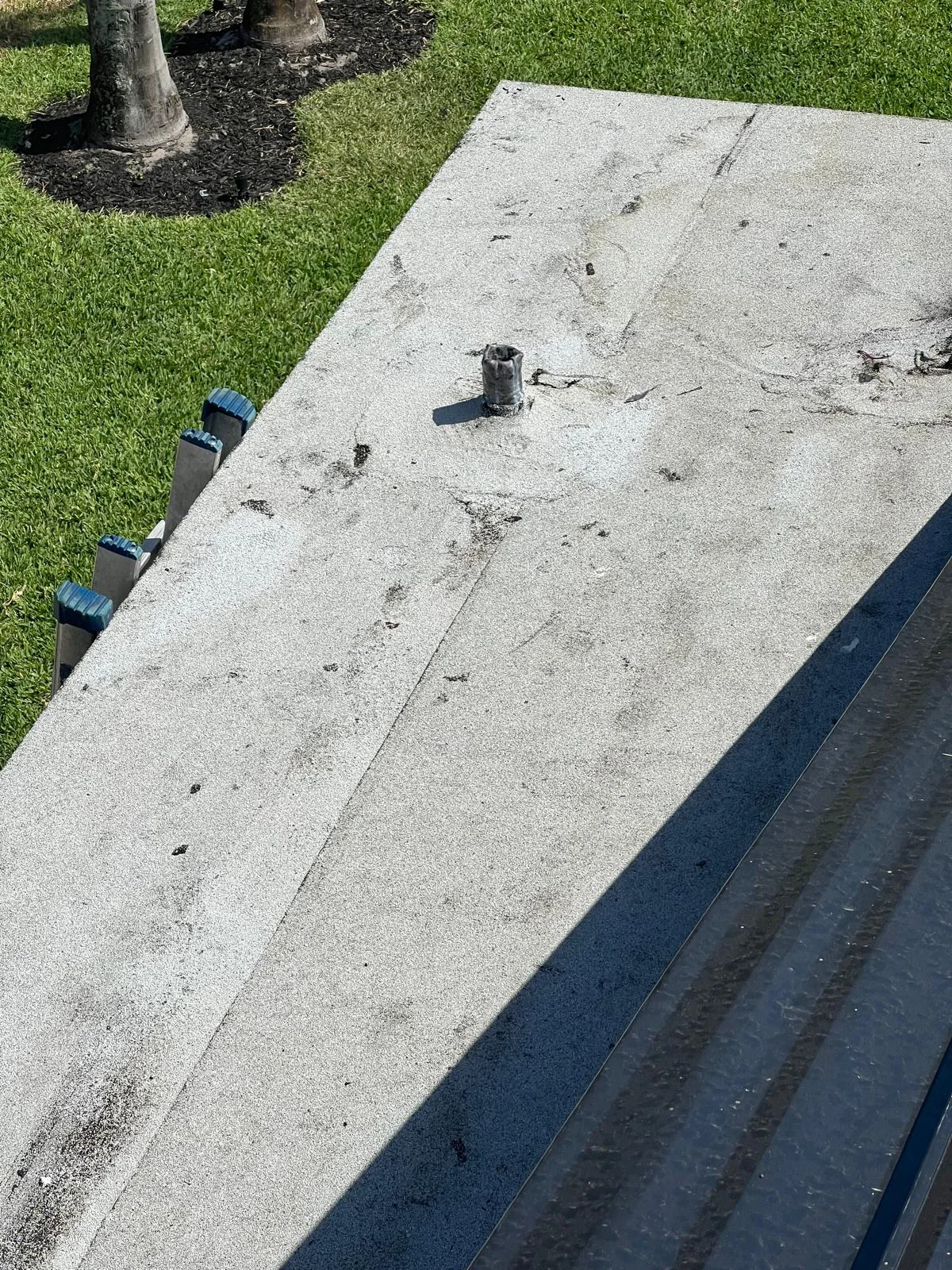
We check the field of the roof, flashing, valleys, penetrations, gutters, and attic signs where accessible. Then we walk you through what we found, with photos. If a targeted fix will do the job, we'll tell you. Our roof repair team handles everything from cracked tiles to failed flashing.
Straight talk on replacement
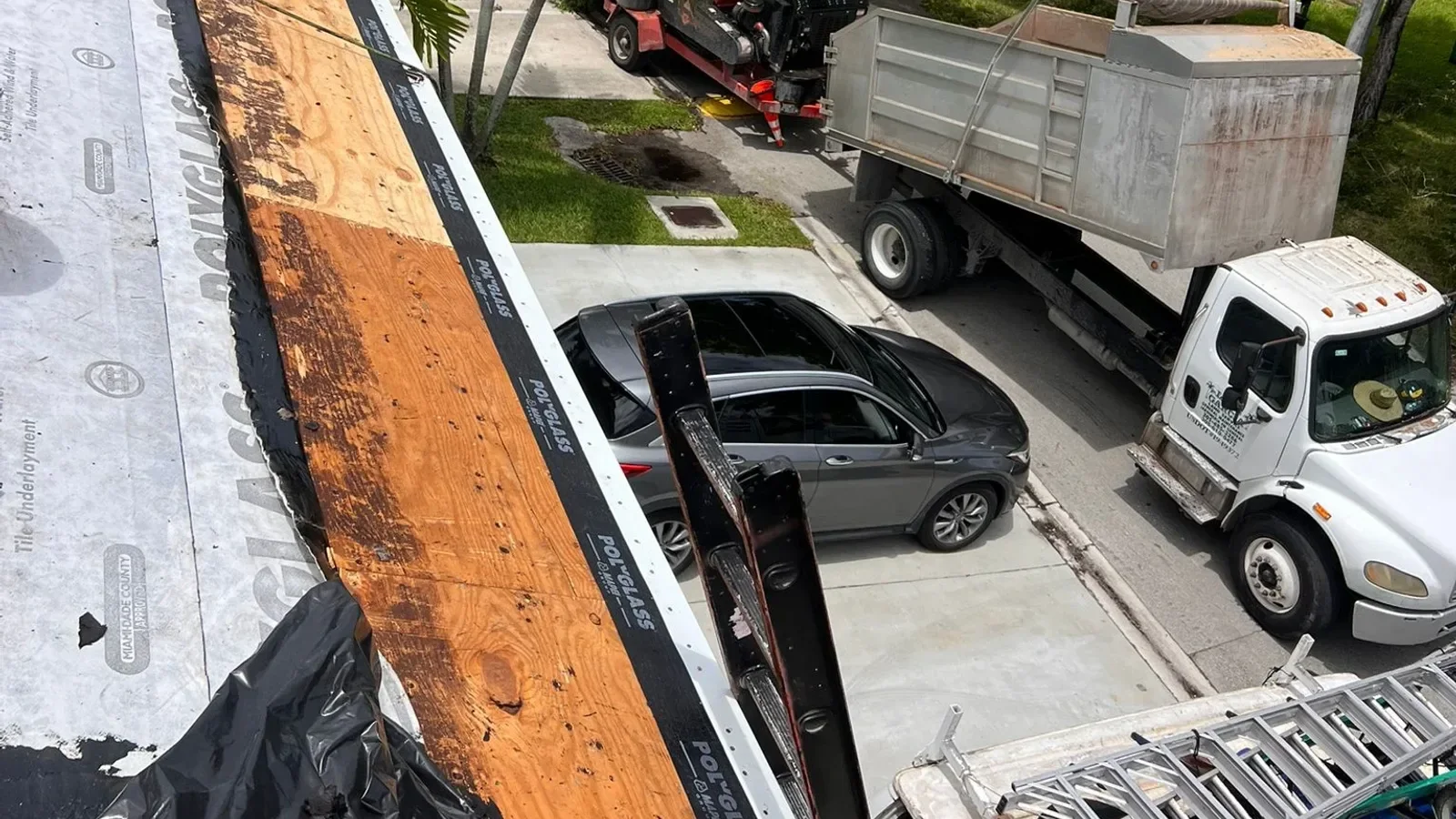
When a roof has reached the end of its useful life, we explain why, and what replacement involves: tear-off, deck inspection and repair, underlayment, and installation of your chosen material to applicable code. You'll know the scope before work begins.
Local work, local conditions
We serve Hollywood and nearby communities, including Aventura. We build our recommendations around salt air, summer storms, and the sun that hammers every South Florida roof. That local lens matters.
Frequently asked questions
How do I know when to replace a roof in Hollywood, FL?
Look at age, widespread wear, and recurring leaks. If your roof is near the end of its typical lifespan and problems keep appearing in new spots, replacement is usually the better value.
Can I repair just part of a tile roof?
Often, yes. Cracked or slipped tiles and localized flashing issues can be repaired. If the underlayment beneath is aged out across the roof, replacement is usually the more lasting fix.
Should I get an inspection after every storm?
After any significant wind event, yes. Damage can be hidden and show up as leaks weeks later, and documentation helps with insurance claims.
Will insurance pay for a new roof?
It depends on your policy, the cause of the damage, and your roof's age. Talk with your insurance agent and get a documented inspection before filing.
How long does a roof replacement take?
Many residential replacements take a few days of on-site work, but permits, material availability, weather, and deck repairs can extend the timeline.