Signs Your Hollywood, FL Roof Needs Repair: Myths vs. Reality
Roughly one in five roof insurance claims filed in South Florida stems from damage that was visible for weeks before the homeowner called a contractor. In Hollywood, FL, where Atlantic storm seasons stack up against year-round humidity and intense UV exposure, that window of missed warning signs can turn a straightforward repair into a far more involved project. The problem isn't that homeowners don't care about their roofs. It's that a lot of what circulates online about roof damage is either oversimplified or flat-out wrong, leaving people unsure whether what they're seeing is urgent, cosmetic, or somewhere in between.
This article works through the most common myths Hollywood homeowners encounter when they start noticing something "off" with their roof, and pairs each one with what's actually going on. If you're already weighing whether a repair is even enough, our full repair vs. replacement guide walks through that decision in depth.
Myth: If There's No Active Leak Inside, Your Roof Is Fine
Reality: Water inside your home is a late-stage symptom, not an early warning sign. By the time a leak drips through your ceiling in Hollywood, moisture has typically been working through underlayment, insulation, and decking for weeks or months. South Florida's high humidity accelerates this process because even small breaches allow warm, moisture-laden air to condense against cooler structural surfaces in your attic.
What to look for instead: dark staining on attic rafters or sheathing, soft spots when you press on the decking from below, or a musty smell in rooms directly under the roofline. These signs often appear long before a visible interior drip. A professional roof inspection can find active moisture intrusion at the source before it migrates further into the structure.
Myth: Missing a Single Shingle Is a Minor Cosmetic Issue
Reality: In Hollywood's climate, a single missing shingle is an open invitation for the next rain event to test your underlayment's limits. Asphalt shingles work as a system: each course overlaps the one below it to shed water away from the deck. Remove one tile or shingle from that system and you've created a direct path for water to reach the underlayment, and potentially the decking beneath it.
Hollywood averages well over 60 inches of rainfall annually, with many of those inches falling in concentrated bursts during hurricane season. A missing shingle that sits unaddressed from June through November isn't a minor cosmetic gap; it's a structural vulnerability through the most demanding weather months of the year. Address it early, and it's a quick repair. Leave it through a few storms, and the decking underneath may need replacement too.
Myth: Granules in Your Gutters Just Mean Your Roof Is Shedding Normally
Reality: New shingles do shed a small amount of loose granules during their first season, but that's a one-time break-in period. If your roof is more than a few years old and you're regularly finding significant granule accumulation in your gutters or at the base of your downspouts, that's a sign of accelerated weathering, not normal aging.
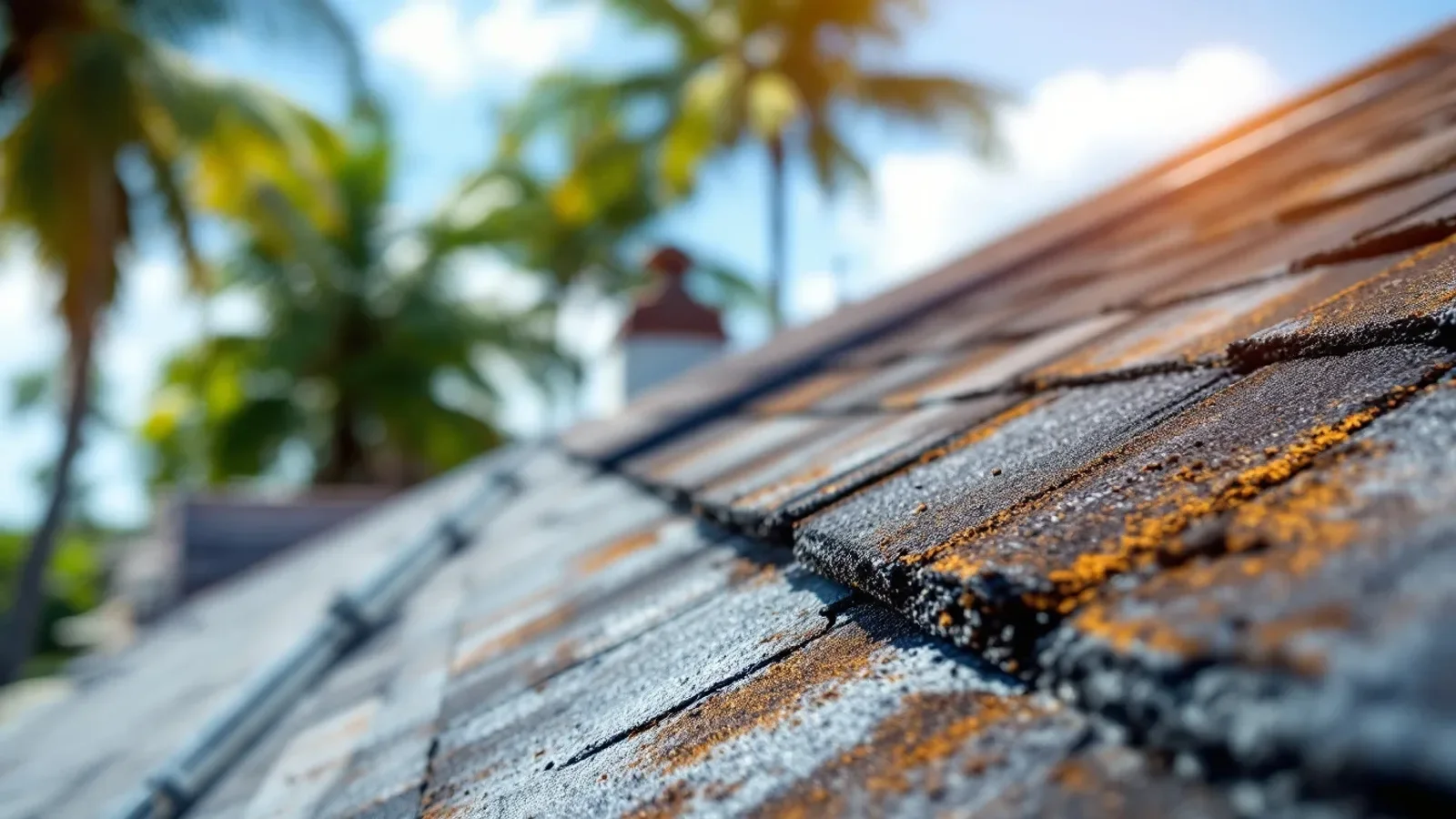
Granules serve a specific purpose: they protect the asphalt layer underneath from UV degradation. Hollywood's sun exposure is intense even by Florida standards, and once granule loss reaches a certain threshold, the exposed asphalt starts to dry out, crack, and curl. You'll often see this in combination with shingles that look noticeably lighter or patchier in color from the ground. This pattern suggests the roof is losing its protective capacity, and it's worth having a contractor assess how widespread the granule loss is. Depending on the roof's age, this may be a repair situation or a signal that the timeline for replacement is shorter than expected. The roof age and replacement timeline guide covers how to factor your roof's age into that assessment.
Myth: Roof Damage Only Happens During Storms
Reality: Hollywood's weather is hard on roofs even on calm, sunny days. Thermal cycling, the daily expansion and contraction of roofing materials as temperatures rise and fall, gradually stresses flashings, sealants, and the fasteners holding shingles in place. Over years, this shows up as lifted shingle edges, cracked pipe boot collars, and flashing that pulls away from walls or chimneys.
If you want it handled correctly the first time, consider professional roof replacement.
Salt air is another constant factor for Hollywood properties, particularly those within a few miles of the coast. Corrosive salt particles accelerate oxidation on metal components like flashing, drip edge, and gutter hardware. Flashings that look intact from the ground may have pinhole corrosion at seams that only becomes obvious during a close-up inspection. Waiting for a storm to reveal these weaknesses means waiting for the worst possible conditions to discover a problem that was already developing.
Myth: You Can Accurately Assess Your Roof's Condition From the Ground
Reality: A ground-level look can reveal obvious issues like missing shingles, visible sagging, or heavy moss growth, but it misses the majority of conditions that lead to leaks and structural damage. Flashing failures, cracked sealant around penetrations, nail pops, and early-stage granule loss are all but invisible from street level.
This is especially relevant in Hollywood, where many homes have low-slope or flat roof sections (common on mid-century CBS construction) that are completely invisible from the ground. Flat and low-slope roofs develop pooling, membrane bubbling, and seam separations that require an on-roof inspection to find. If your home has any flat sections, a ground-level check gives you almost no useful information about those areas. For a thorough picture of what's actually happening, understanding when repair versus replacement is the right call starts with knowing the full scope of damage, which requires getting eyes on the actual surface.
Myth: Roof Repairs Are Always a Temporary Band-Aid
Reality: This is one of the most persistent misconceptions in roofing, and it often pushes homeowners toward unnecessary replacements. A well-executed repair on a structurally sound roof with localized damage can add years of reliable service life. The key word is localized. If the damage is confined to a specific area, the surrounding shingles and decking are in good condition, and the roof is not approaching the end of its expected lifespan, a targeted repair is a legitimate long-term solution, not a stopgap.
Where repairs become genuinely temporary is when they're applied to a roof with widespread deterioration, significant decking damage, or systemic failures across multiple areas. In those cases, repairing one section often just shifts where the next problem surfaces. The distinction between these two scenarios is exactly what a thorough inspection is designed to reveal. If you're trying to work out which side of that line your roof falls on, our repair vs. replacement decision guide lays out the specific factors that determine which path makes more sense for your situation.
Myth: Moss and Algae Are Just Cosmetic Problems
Reality: The dark streaking you see on roofs throughout Hollywood's older neighborhoods is typically Gloeocapsa magma, a type of algae that feeds on the limestone filler in asphalt shingles. While the streaks themselves don't immediately compromise the shingle, heavy algae growth retains moisture against the surface, which accelerates granule loss and shingle degradation over time.
Moss is a more immediate concern. Unlike algae, moss develops root-like structures that physically lift shingle edges as it grows, creating gaps that allow water to penetrate. Hollywood's shaded yards and humid microclimate make moss growth more likely on north-facing roof sections or areas under tree canopy. If you're seeing raised, cushion-like green growth rather than flat dark streaking, that's a condition worth addressing before the next rainy season, not after it.
Hollywood's Roofing Context: Why These Myths Cost Local Homeowners More
Many local homeowners rely on expert roof replacement for exactly this.
Hollywood, FL sits in Broward County's coastal corridor, and the local housing stock reflects several distinct eras of construction. Many homes built between the 1950s and 1980s used concrete block (CBS) construction with original flat or low-slope roofs that have been re-covered multiple times. Homes from the 1990s and early 2000s often have three-tab asphalt shingles that are now approaching or past their typical service life in a South Florida climate. Newer construction increasingly uses concrete tile or metal roofing to meet updated Florida Building Code wind-resistance requirements.
Each of these roof types shows damage differently, and the warning signs that matter for a 1960s flat-roof home are not the same as those on a 2005 shingle roof or a newer tile installation. Hollywood's proximity to the ocean also means that salt-air corrosion is a real factor for metal components regardless of roof type, and the city's position in the Florida High Velocity Hurricane Zone (HVHZ) means that roofing materials and repairs must meet specific code standards that don't apply in other parts of the country. When you're evaluating damage or deciding whether a repair is sufficient, these local factors matter. A contractor familiar with Broward County's permitting requirements and HVHZ standards will assess your roof differently than one who primarily works outside the zone.
If you're noticing any of the warning signs covered above, the guide to roof age and replacement timelines in Hollywood can help you put those signs in context based on how old your specific roof system is.
Frequently Asked Questions
How often should a Hollywood, FL homeowner have their roof inspected?
Most roofing professionals recommend an inspection at least once a year, with an additional check after any named storm or significant wind event. Hollywood's storm season runs from June through November, so a pre-season inspection in late spring gives you a chance to address any vulnerabilities before peak weather arrives.
Can I inspect my own roof safely?
A visual check from the ground or from a ladder at the eave level is reasonable for spotting obvious issues like missing shingles or clogged gutters. Walking on the roof itself carries fall risk and can also cause additional damage to shingles, particularly on older or low-slope surfaces. For anything beyond a quick visual scan, a licensed roofing contractor has both the equipment and the trained eye to find damage that isn't visible from a safe vantage point.
What's the difference between a roof inspection and an insurance inspection?
A contractor inspection is focused on identifying damage and recommending repairs or replacement. An insurance inspection is conducted by or on behalf of your insurer to assess coverage eligibility or claim validity. They serve different purposes, and the findings don't always align. If you're filing a claim, having your own contractor's assessment documented beforehand gives you a clear record of the roof's condition.
Does every repair in Hollywood require a permit?
Permit requirements vary based on the scope of work and Broward County's local codes. Minor repairs like replacing a few shingles may not require a permit, while larger repairs involving decking replacement or flashing work often do. Requirements in the HVHZ can be stricter than in other parts of Florida. A licensed local contractor can advise on what's required for your specific project, and pulling the correct permits protects you during future home sales and insurance reviews.
What warning signs mean I should call someone right away rather than wait?
Visible sagging in the roofline or ceiling, active water intrusion during rain, large sections of missing shingles after a storm, and any damage that exposes the decking directly to the elements are all situations where prompt attention prevents the damage from compounding. PSR Roofing offers emergency roofing services for exactly these situations, when waiting until a regular appointment window isn't a practical option.
What to Do When You Spot the Warning Signs
Most of the warning signs covered here share a common thread: they're easier and less costly to address early than after they've had time to develop. A granule loss issue spotted in spring is a repair conversation. The same issue discovered after a wet hurricane season may involve decking replacement and interior remediation.
If you're seeing any of the signs described above on your Hollywood home, the next step is getting an accurate picture of the full scope of damage. From there, the repair vs. replacement decision becomes much clearer once you know exactly what you're working with. PSR Roofing serves Hollywood and the surrounding Broward County area with inspections, repairs, and full replacements, and can help you work out which path makes sense for your specific roof and budget.
Continue reading