Roof Repair in Hollywood, FL: The Edge Details Homeowners Never Look At
Almost every homeowner who calls us about a leak describes the middle of the roof. Almost every leak we actually find starts at the edge.
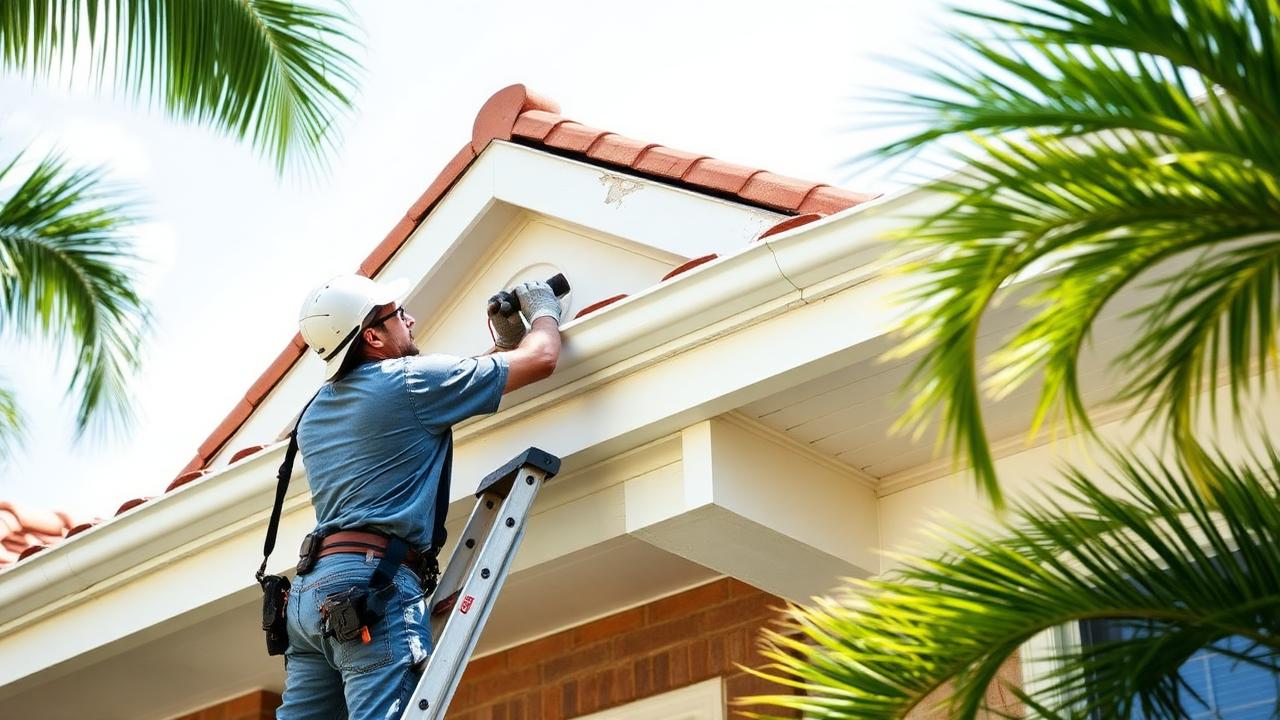
The eave line — soffit, fascia, drip edge, and the first two feet of decking behind them — takes more abuse than any other part of a South Florida roof. It catches wind-driven rain sideways, it holds the gutter load, it sits closest to salt air, and it is the one area no one inspects because it is hidden behind a straight painted board. This article opens a five-part roof repair series for Hollywood, Florida homeowners, and it starts at the edge because that is where the money is usually lost first.
What the Eave Assembly Actually Does
Four components work together, and they only work together:
- Drip edge is the metal L-profile at the roof perimeter. It carries water past the fascia into the gutter instead of letting it curl back under the shingle or tile.
- Fascia is the vertical board the gutter hangs on. It closes the end of the rafter tails.
- Soffit is the horizontal underside panel. In Florida it is also your primary intake ventilation.
- Starter course and edge metal fastening hold the whole perimeter down in high wind. Roofs rarely peel from the middle; they peel from an edge that lifted.
When one of these fails, the failure travels. A rotted fascia loosens the gutter, the gutter tilts, water sheets behind it, and now the sheathing edge stays wet after every afternoon storm.
How the Edge Fails in Broward County
Salt air eats the metal first
Homes east of Federal Highway — Hollywood Lakes, Harbor Islands, Hollywood Beach, and the Intracoastal corridor toward Dania Beach — corrode aluminum drip edge and steel gutter spikes years faster than inland houses. We routinely pull edge metal in these neighborhoods that has perforated behind an intact-looking gutter.
Wind-driven rain runs uphill
A tropical squall pushes rain horizontally. Without a properly lapped drip edge and a sealed starter, that water gets behind the first course and onto the decking. This is why a house can leak in a storm and stay perfectly dry during a calm all-day rain.
Gutters overload the fascia
Clogged gutters in Emerald Hills, Hollywood Hills, and Beverly Park — where mature oaks and ficus drop constantly — can hold hundreds of pounds of wet debris. That weight pulls fasteners out of a fascia board that is already softening.
Soffit vents get painted or blocked
Every re-paint cycle closes a few more perforations. Blocked intake starves the attic, raises deck temperatures, and shortens shingle life from the underside.
Signs Your Eave Line Needs Attention
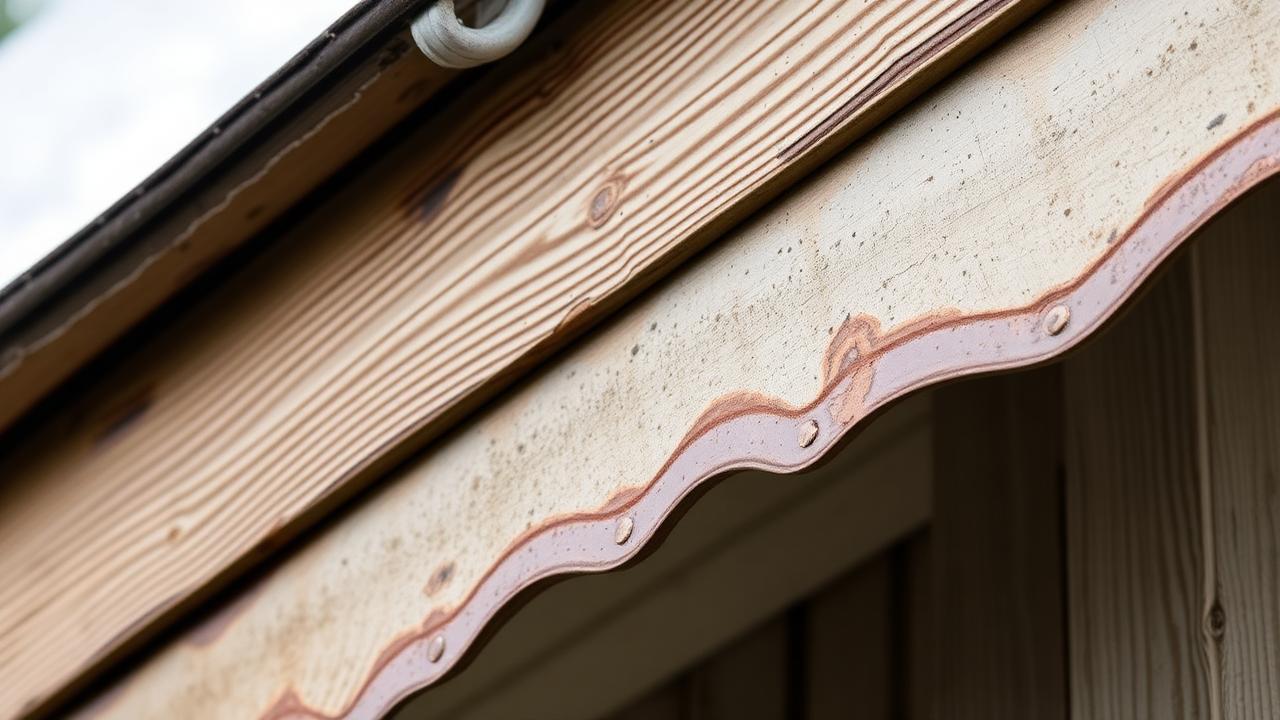
- Paint blistering or peeling on the fascia in one section only
- A gutter that has pulled slightly away or sags between hangers
- Soffit panels bowing, stained, or loose at the wall channel
- Wasp or bird activity inside the soffit cavity — an opening exists
- Dark streaks on the wall directly under the gutter line
- A soft spot when you press the fascia with a screwdriver handle
- Visible daylight from inside the attic at the eave
Two or more of these together mean the decking edge is probably involved, and that is a roof repair call rather than a painter's call.
What a Correct Eave Repair Includes
A repair that only replaces the visible board fails again in two seasons. The full sequence looks like this:
| Step | What happens | Why it matters |
|---|---|---|
| Gutter removal | Gutter taken down and set aside | Nothing can be assessed through it |
| Tear-back | First courses of tile or shingle lifted 24–36 in. | Exposes the true rot line |
| Sheathing repair | Damaged plywood cut back to sound framing, replaced to code | Rot never stops on its own |
| Rafter tail repair | Sistered or replaced where soft | Fascia has nothing to hold otherwise |
| New drip edge | Corrosion-resistant profile, correct laps, code fastening | The actual waterproofing detail |
| Underlayment tie-in | Self-adhered membrane lapped over the metal correctly | Order of layers decides if it leaks |
| Fascia and soffit | New material, vented soffit restored | Ventilation and wind resistance |
| Gutter reset | Re-hung with proper pitch and new hangers | Prevents the next cycle |
In the High-Velocity Hurricane Zone, edge metal and its fastening pattern are code-regulated items with Florida Product Approval requirements. This is a common failure point on unpermitted handyman work.
Cost Expectations in Hollywood
Eave work is priced by linear foot, not by square. Broward County ranges as of 2026:
| Scope | Typical range |
|---|---|
| Fascia replacement, sound framing behind | $18 – $32 per linear ft |
| Fascia plus rafter tail repair | $35 – $60 per linear ft |
| Vented soffit replacement | $12 – $25 per linear ft |
| Drip edge replacement with tear-back | $14 – $28 per linear ft |
| Sheathing edge replacement | $150 – $400 per sheet |
A single-elevation repair on a typical Hollywood ranch usually lands between $1,200 and $4,500. An on-site assessment is the only way to get a real number, because the rot line is never where it looks like it is from the ground.
When Edge Repair Signals a Bigger Conversation
If three or four elevations all show soft fascia and the underlayment is at the end of its service life, spending on perimeter repairs first is money spent twice. That is the moment to price a full roof replacement against staged repairs and decide with numbers instead of hope. A documented roof inspection gives you the evidence either way — and gives your insurer something better than a guess at renewal time.
Frequently Asked Questions
Can I just replace the fascia board?
Only if the framing and decking behind it are dry and sound. Covering wet plywood with new wood traps moisture and accelerates the failure.
Does homeowners insurance cover rotted fascia?
Generally no. Gradual deterioration is maintenance. Storm-driven damage — a limb tearing off a gutter and fascia section — usually is covered. Photograph the damage before anything is removed.
Should aluminum or PVC fascia be used near the water?
PVC and fiber-cement do not rot and hold up well in coastal Hollywood. Aluminum wrap over wood looks clean but hides moisture, which is why we open wrapped fascia during every inspection near the Intracoastal.
How long does the work take?
Most single-elevation eave repairs are a one- to two-day job, weather permitting. Extensive rot with rafter tail replacement can run three days.
Next in This Series
Once the perimeter is sound, the next most common source of avoidable leaks in Hollywood is everything mounted on the roof — starting with solar arrays. That is the subject of the next article: roof repair around solar panels in Hollywood, FL.
If you have a sagging gutter, a stained soffit, or peeling fascia paint, get it looked at before hurricane season peaks. Schedule a roof repair assessment or reach us through the contact page.
Find us: PSR Roofing Company of Hollywood on Google Maps — 3440 Hollywood Blvd, Suite 415, Hollywood, FL 33021. Call (754) 291-4149.
Series navigation: The Edge Details · Roof Repair Around Solar Panels