
Evaluating Roof Leaks After Tropical Storms in Hollywood, Florida
Tropical storms and high-velocity wind events are a regular part of life in Broward County. When a major weather system rolls through South Florida, it leaves behind more than just debris in the yard, it puts residential roofing systems through a punishing physical test. Homeowners often discover dripping ceilings or water stains on drywall hours or even days after the storm has passed. Understanding how to safely evaluate these issues and take the right initial steps is critical to preventing long-term structural issues and ensuring a smooth recovery process. When dealing with water intrusion, obtaining a professional roof repair hollywood fl assessment is the most reliable way to secure your home.
The Immediate Danger is Often What You Cannot See
The Hidden Nature of Water Migration
Water rarely travels in a straight line. A wet spot on your living room ceiling does not automatically mean there is a hole in the roof directly above it. Water typically penetrates the outer roofing material, runs down the underlayment, trickles along a structural rafter, and finally drops onto the drywall ceiling where it pools. Tracking this path requires an understanding of gravity, roof pitch, and residential construction methods. Attempting to guess the source of a leak without a systematic inspection often leads to incomplete repairs that leave underlying rot unaddressed.
The Risk of Trapped Moisture in Attic Spaces
South Florida is notoriously humid, and a compromised roof turns an attic into a greenhouse. When rainwater leaks into a dark, unventilated attic space, it creates an environment where organic materials like wood sheathing and paper-faced drywall quickly absorb the moisture. Within 24 to 48 hours, this trapped moisture can foster mold growth, which degrades indoor air quality and structurally weakens your ceiling joists. Prompt action is necessary to dry out these spaces before superficial damage becomes a major remediation project.
Compromised Structural Integrity of Roof Decking
Plywood or oriented strand board (OSB) decking serves as the foundation for your shingles, metal panels, or concrete tiles. When water bypasses the water-resistant underlayment, the wood decking absorbs the moisture, swells, and loses its structural strength. Over time, saturated decking will sag, split, or rot, making it impossible for roofing fasteners to hold securely. If you walk on a roof with rotted decking, you risk stepping right through it, which is why professional inspections are always recommended over DIY roof walks.
A Step-by-Step Guide to Safe Interior Damage Assessment
Start in the Living Spaces
Before grabbing a ladder or looking outside, walk through your home with a high-powered flashlight. Examine every ceiling and wall, paying close attention to corners, window frames, and the joints where walls meet the ceiling. Look for bubbling paint, peeling wallpaper, sagging drywall, or faint brown rings. These discolored rings are mineral deposits left behind as rainwater filters through wood and drywall. Touch these areas very gently with a dry hand or a non-contact moisture meter if you own one. If the drywall yields to light pressure, it is saturated and requires immediate attention.
Safe Inspection of the Attic Cavity
If you have safe, stable access to your attic via a pull-down ladder or hatch, perform a visual check during daylight hours. Never step off the wooden ceiling joists onto the insulation, as you will fall through the ceiling. Keep your flashlight off for a moment and look for daylight shining through the roof deck, which indicates missing shingles, tiles, or failed flashing. Turn your light back on and inspect the underside of the roof decking, rafters, and trusses for dampness, dark water stains, or active dripping. Pay special attention to the areas around roof penetrations, such as plumbing vents, attic fans, and chimneys.
Documenting Everything for Insurance Purposes
To ensure a smooth claims process with your homeowner insurance provider, document every sign of water intrusion immediately. Take wide-angle photos of the affected rooms to show the context of the damage, followed by close-up shots of specific water stains or dripping water. Capture video footage of active leaks if they are dripping. Keep a written log detailing the date and time you first noticed the leak, the weather conditions at the time, and any temporary steps you took to mitigate the water, such as placing buckets or moving furniture. This paper trail is invaluable when working with a roof repair company to file a comprehensive storm damage claim.
The Difference Between Shingle, Tile, and Metal Roof Storm Failure
Different roofing materials fail in distinct ways when subjected to tropical storm-force winds. Understanding these material-specific failure points helps you know what to look for when inspecting your home from ground level.
| Roofing Material | Primary Failure Point | Post-Storm Warning Signs | Repair Complexity |
|---|---|---|---|
| Asphalt Shingle | Wind uplift, sealant strip failure, loss of granules | Creased, torn, or missing shingles; exposed underlayment | Moderate; localized shingle replacement is common |
| Concrete or Clay Tile | Chattering, fastener failure, impact breakage | Cracked, slipped, or entirely missing tiles; exposed mortar beds | High; requires matching tile profiles and securing underlayment |
| Metal Panel | Gasket degradation, fastener backing out, seam separation | Lifted panels, loose exposed screws, whistling sounds in wind | High; often requires panel replacement and precise flashing work |
Asphalt Shingles and Wind Uplift
Asphalt shingles rely on a factory-applied adhesive strip to bond them to the shingle layer below. Tropical storm winds can lift the edges of these shingles, breaking the adhesive seal. Once the seal is broken, the shingles flutter and crease, or tear away completely, exposing the underlayment underneath. Even if the shingles settle back down after the wind subsides, the seal is broken, allowing future rains to blow directly up and under the shingles. Look for dark patches on your roof from the ground, which indicate where shingles have torn away.
Tile Roof Shift and Mortar Failure
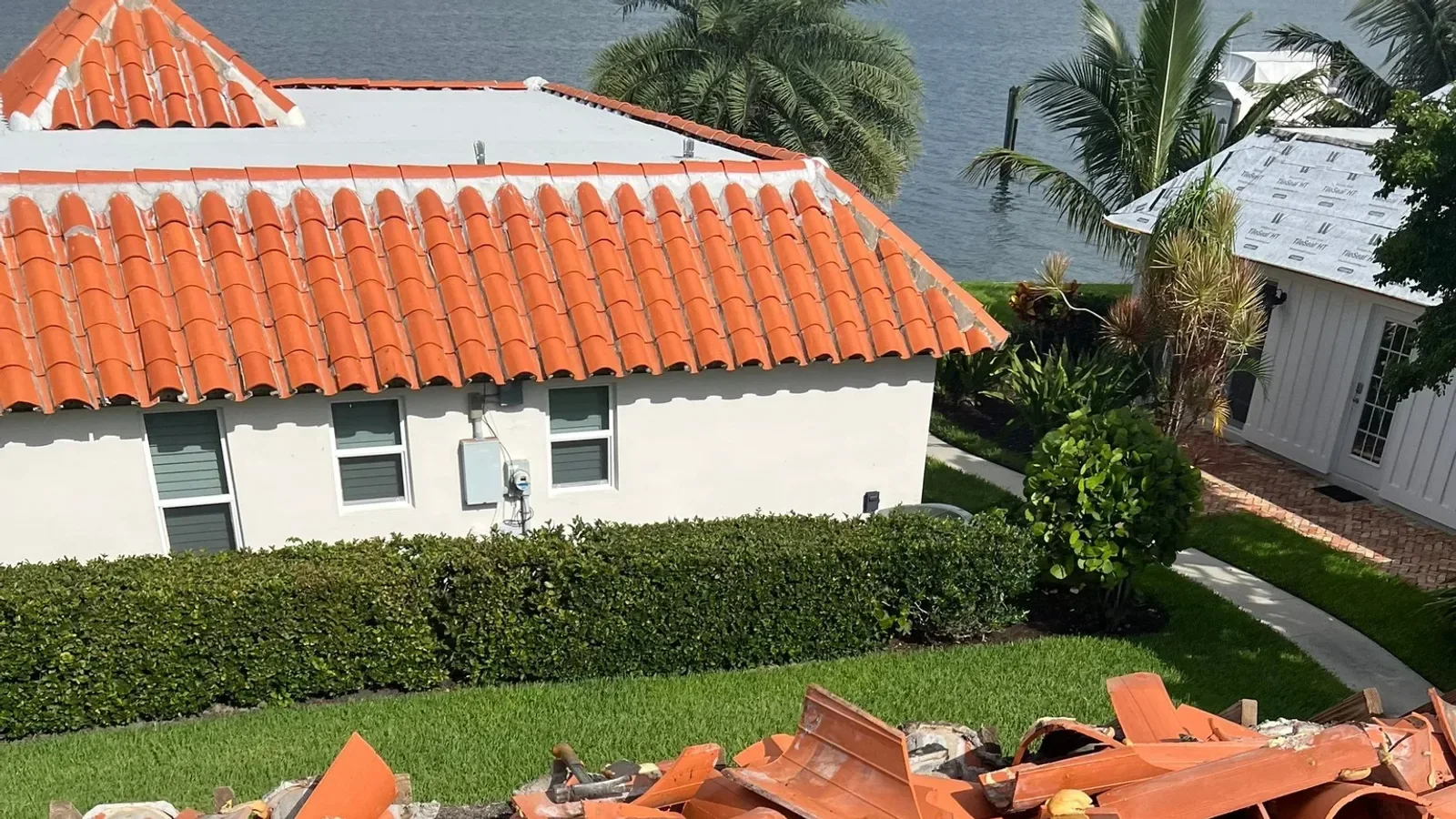
Concrete and clay tiles are popular across Hollywood, Florida, for their durability and classic look. However, heavy winds can cause tiles to chatter, vibrationally loosening their fasteners or the mortar adhesive holding them in place. This movement can crack individual tiles or cause them to slide out of position, exposing the underlying waterproof membrane. Because the membrane under tiles is highly sensitive to UV degradation, leaving these areas exposed to the South Florida sun for even a few weeks can cause the underlayment to crack and leak.
Metal Roofing Panel Seam Separation
Metal roofs offer excellent wind resistance, but they are not entirely immune to storm damage. High winds can create immense uplift pressure at the corners and eaves of a metal roof. If the fasteners were slightly over-tightened during installation, the metal panels can tear around the screw heads, allowing the wind to peel the panels back. Additionally, flying debris from storms can dent or scratch the protective coatings, or compromise the integrity of standing seams and flashing joints, leading to slow, persistent leaks that are difficult to locate without professional diagnostic tools.
Conducting a Safe Ground-Level Exterior Inspection
The Risks of Climbing on a Damaged Roof
Walking on a roof after a tropical storm is highly hazardous. Wet algae-covered tiles, loose asphalt shingles, and slick metal panels present severe slip-and-fall risks. Furthermore, structural damage to the roof decking may not be visible from above, meaning you could step onto a weakened section and fall through. It is always safest to conduct your initial exterior inspection from the safety of the ground, using binoculars or a high-quality camera zoom lens to spot abnormalities.
What to Look for Around the Eaves and Fascia
Stand back from your home and examine the roofline, starting at the lowest edges. Look for sagging gutters, loose fascia boards, or flashing that has peeled away from the roof edges. Drip edges are crucial for directing water away from your home's wood structure; if they are bent or missing, water will run backward under your shingles or tiles, rotting the wood behind your gutters. Check for water stains on the exterior soffits under the roof overhang, which is a classic sign of water traveling backward from a blocked or damaged roof edge.
Identifying Roof Penetration Failures
A significant percentage of post-storm leaks occur around roof penetrations rather than in the field of the roof itself. Direct your attention to the chimney, plumbing stacks, attic vents, and valleys where two roof planes meet. The metal flashing in these areas is subject to high wind pressure, which can pull it away from the roof deck or break the caulking seals. Look for cracked rubber boots on plumbing vents or distorted metal collars around exhaust pipes, as these are common pathways for heavy rain to enter during a tropical storm.
When to Call for Emergency Roofing Services
Active, Uncontrolled Water Intrusion
If water is actively pouring into your home during a rainstorm and bucket mitigation is not keeping up, you are facing an emergency. Uncontrolled water can quickly ruin drywall ceilings, short-circuit electrical systems, and destroy flooring. In these situations, calling for emergency roofing hollywood fl support is essential. Professional teams can respond with emergency tarping services to halt water entry temporarily until weather conditions allow for a permanent structural fix.
Structural Roof Sagging or Partial Collapse
Heavy storm debris, such as fallen tree limbs, can compromise the structural load-bearing capacity of your roof. If you notice any dipping in your roofline from the exterior, or if you see bowing rafters in your attic, the structure is unsafe. Evacuate the affected area of the home immediately. Do not attempt to clear the debris yourself, as the weight distribution is unpredictable and could trigger a localized collapse. A licensed roofing contractor hollywood fl must evaluate the structural integrity before any repairs begin.
Widespread Loss of Roofing Material
If a significant portion of your roof has lost its protective covering, leaving large areas of underlayment or bare wood decking exposed to the elements, your home is highly vulnerable to the next afternoon rainstorm. Even if it is not actively leaking inside yet, a compromised outer layer will fail quickly under normal Florida weather conditions. Prompt action is needed to secure temporary protection and plan a comprehensive roof repair strategy to prevent a cascading series of indoor water issues.
Navigating the Repair and Insurance Claim Process in Hollywood, FL
Filing Your Insurance Claim Promptly
In Florida, there are strict timelines for filing storm-related insurance claims. Contact your insurance carrier as soon as you confirm storm damage to initiate the claim process. Provide them with the documentation, photos, and log you compiled during your initial inspection. Be prepared for an insurance adjuster to visit your property to evaluate the damage. Having a trusted roofing contractor present during the adjuster's inspection ensures that all structural damage is accurately identified and documented in the official report.
Choosing a Licensed and Insured Local Contractor
After a major storm, out-of-state contractors often descend on South Florida offering quick fixes. To protect yourself from subpar workmanship and potential warranty issues, always hire a locally based, state-licensed, and fully insured contractor. A local business understands Broward County wind-borne debris regulations and the strict Florida Building Code requirements. Verify their credentials on the Florida Department of Business and Professional Regulation (DBPR) portal before signing any contracts or paying deposits.
Understanding the Repair vs. Replacement Decision
Depending on the age of your roof and the extent of the storm damage, you may have to decide between a localized repair and a full roof replacement. Under the Florida Building Code, if more than 25% of a roofing system is damaged within any 12-month period, the entire roof must be brought up to the current building code standards, which often necessitates a complete replacement. A reputable local contractor will provide an honest assessment, helping you weigh the structural and financial benefits of both options so you can make an informed decision for your home.
Frequently Asked Questions
How long do I have to file a storm damage roof claim in Florida?
Under Florida law, homeowners generally have a specific window of time from the date of the storm to file a property insurance claim. Because these regulations can change, it is critical to consult your policy documents and report any suspected damage to your insurer as quickly as possible to avoid complications or denial of coverage.
Can I patch a tile roof temporary with a tarp?
Yes, securing a heavy-duty, UV-resistant tarp over the damaged area is the standard temporary mitigation method. However, tarping a tile roof is complex because the uneven surface can let water slip underneath if it is not secured properly. Tarps should be weighted or fastened securely by professionals to prevent wind from peeling them off during subsequent storms.
How do I know if my roof leak is from old age or storm damage?
Storm damage is typically characterized by sudden, violent failures, such as torn shingles, cracked tiles from impact debris, or lifted flashing. Old-age leaks usually present as gradual wear, such as worn-away shingle granules, rusted flashing, dry-rotted pipe boots, or slow leaks in valleys. A professional roof inspection can determine the primary cause of water intrusion.
What should I do if water is dripping from a ceiling light fixture?
If water is leaking through or near an electrical fixture, turn off the electricity to that specific circuit at your main breaker panel immediately. Do not touch the fixture or the switch. Once the power is safely turned off, place a bucket underneath to catch the water, and call an electrician alongside an emergency roofing specialist to resolve the safety hazards.
Protect Your Home with Expert Local Roofing Services
Dealing with the aftermath of a tropical storm can be overwhelming, but you do not have to navigate the recovery process alone. For dependable, professional assistance in securing and restoring your home, schedule your roof repair inspection today with PSR Roofing Company of Hollywood.