
Emergency Roofing Services and Your Insurance Claim: What Hollywood, FL Homeowners Must Document
Two homeowners on the same street in Emerald Hills can suffer identical storm damage, hire the same crew, and end up with completely different claim outcomes. The difference is almost never luck — it is documentation. This article explains exactly what to capture when you use emergency roofing services in Hollywood, Florida, so that the work protecting your home also protects your claim.
This is part three of our emergency series. If you have not read them yet, start with your first 24 hours after roof damage and the breakdown of emergency roofing services cost.
The Rule That Works in Your Favor
Florida homeowner policies generally require the insured to take reasonable steps to prevent further damage after a covered loss. This cuts both ways, and both sides help you:
- You are expected to act. Waiting three days while water pours in can be treated as a failure to mitigate, and the additional damage may be denied.
- Reasonable mitigation is typically reimbursable. Tarping, temporary patching, water extraction, and drying are ordinarily payable as part of the loss.
The practical takeaway: call for emergency stabilization promptly, and treat every action as something you will later need to prove.
The Documentation Checklist
Before any work begins
- Wide exterior photos of the house from all four sides.
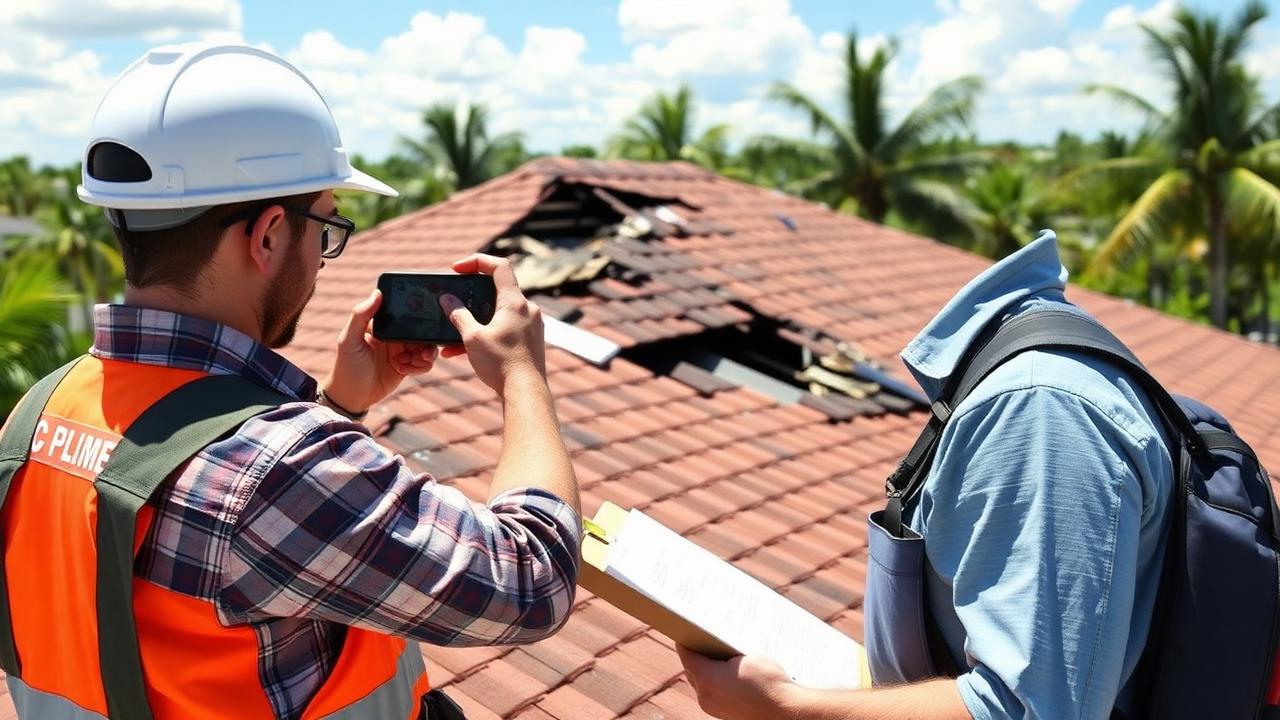
- Close-ups of the damage: lifted shingles, cracked or slipped tiles, torn flashing, punctures, split membrane seams.
- Yard evidence: fallen limbs, shingle tabs, tile fragments, granule accumulation at downspout outlets.
- Interior photos of every stain, drip, wet carpet, and warped baseboard.
- A short video walkthrough narrating what you see, with the date spoken aloud.
Keep original files. Do not crop, filter, or re-save through messaging apps that strip metadata.
During emergency work
- Photos of the crew's stabilization in progress and completed.
- The contractor's written assessment of what failed and why.
- Notes on when water entry stopped.
After stabilization
- An itemized invoice separating emergency mitigation from proposed permanent repair.
- Moisture readings or attic photos showing the extent of saturation.
- Receipts for anything you purchased yourself — buckets, plastic sheeting, fans, a hotel night if the home was uninhabitable.

Sudden Loss vs. Deterioration: The Distinction That Decides Claims
Carriers pay for sudden, accidental events. They generally do not pay for gradual wear. Your file should make the sudden nature of the loss obvious:
| Supports a covered loss | Suggests deterioration |
|---|---|
| Damage appears after a dated storm event | Stain that has slowly grown for months |
| Physical evidence in the yard | No exterior damage found |
| Directional wind pattern across one slope | Uniform granule loss across the whole roof |
| Prior inspection report showing sound condition | No maintenance history at all |
That last row is why an annual roof inspection is quietly one of the most valuable documents a Hollywood homeowner can own. A dated report showing your roof was in good condition in March makes an August storm claim far harder to reclassify as wear.
Working With the Adjuster
When the adjuster visits, have your file organized and be present for the inspection if possible. Ask your contractor to attend as well — a licensed roofer can point out damage on the roof surface that a ground-level walkthrough misses, and can speak to Florida Building Code requirements that affect the repair scope.
Two code realities that frequently change a Broward County claim:
- High-Velocity Hurricane Zone requirements. Replacement materials must carry current Florida Product Approval or Miami-Dade Notice of Acceptance, and fastening patterns are prescribed. Cheaper "like for like" assumptions do not always comply.
- The 25% rule. When more than 25% of a roof section is repaired or replaced within a 12-month period, the affected portion generally must be brought up to current code, which can shift the scope toward full roof replacement.
If the adjuster's scope omits code-required items, your contractor can submit a supplement with the code citation and photo support.
Common Mistakes That Weaken Claims
- Signing an assignment of benefits at the door without reading it. Understand what you are giving away before handing over your claim rights.
- Permanent repairs before the adjuster sees the damage. Stabilize, yes. Rebuild, not yet.
- Discarding removed materials. Damaged tiles and torn underlayment are evidence.
- Verbal-only scopes. If it is not written, it did not happen.
- Missing the notice window. Florida imposes deadlines for reporting property claims; report promptly and confirm the date in writing.
Coverage terms, deadlines, and reimbursement rules vary by policy and carrier. Review your specific policy and consult your agent or a licensed public adjuster for guidance on your claim.
Frequently Asked Questions
Will emergency tarping void my coverage?
No. Documented, reasonable mitigation is generally expected under your policy. Undocumented demolition or premature permanent repair is the actual risk.
What if my claim is denied as wear and tear?
Request the denial in writing with the specific policy language cited, then have a licensed roofer produce a detailed damage report. Many denials are reversed on supplement when physical evidence of a sudden event is properly presented.
Can PSR Roofing work directly with my insurance company?
Our team provides the written assessments, photo documentation, and code citations adjusters ask for, and we can meet the adjuster on site. We do not act as your public adjuster or provide legal advice.
How soon after the storm should I file?
As soon as you have safely documented the damage — typically within the first day or two. Prompt reporting is one of the strongest signals of a legitimate sudden loss.
Next in This Series
Documentation is easier when you prepare before the storm rather than during it. Read hurricane season emergency roofing services in Hollywood, FL for a pre-season readiness plan.
Need a licensed team on site that documents the job properly from the first photo? Request emergency roofing services from PSR Roofing Company of Hollywood, or reach us through the contact page.